So, you’ve got your RV and you’re ready to hit the road! That’s awesome. Before you get too far from civilization, it’s a really good idea to have some basic tools on hand. Think of it like packing your toothbrush – you wouldn’t leave home without it, and neither should you leave your RV without a few essential RV tools. This isn’t about becoming a full-blown mechanic overnight; it’s about being prepared for those little hiccups that can pop up, saving you time, money, and a whole lot of stress when you’re miles from anywhere.
Let’s break down what you actually need to keep in your RV for those inevitable moments. We’ll go from the absolute basics to a few things that’ll just make life easier.
These are the items that will get you out of a jam, no question. They’re not fancy, but they are incredibly useful. If you’re just starting out and want to keep your tool collection lean, these are your priorities.
Table of Contents
Basic Hand Tools: Your Go-To Gear
You don’t need a massive toolbox filled with specialized equipment. A few well-chosen pieces will cover a surprising amount of ground.
Screwdrivers (Phillips & Flathead)
- Why you need ’em: From tightening a loose cabinet handle to adjusting that slightly off-kilter RV door latch, screwdrivers are your bread and butter.
- What to look for: Get a set with a few different sizes for both Phillips (the ones with the cross head) and flathead (the straight ones). Having a medium and a large size of each is usually enough to start. Consider a multi-bit screwdriver with interchangeable tips if you want to save space.
Pliers (Needle-Nose & Slip-Joint)
- Why you need ’em: Need to grip something small, bend a wire, or hold a nut while you tighten a bolt? Pliers are the answer. Needle-nose are great for tight spots, and slip-joint pliers offer a bit more versatility for wider grips.
- What to look for: A decent pair of each will serve you well. Don’t go for the cheapest you can find; a good grip and solid construction matter here.
Adjustable Wrench
- Why you need ’em: This is your universal fastener savior. An adjustable wrench can take the place of a whole set of fixed wrenches because you can dial it to fit almost any nut or bolt size.
- What to look for: Get one that feels comfortable in your hand and has a smooth adjustment mechanism. A 10-inch or 12-inch size is a good all-rounder for RV applications.
Wire Cutters/Strippers
- Why you need ’em: While you probably won’t be doing complex electrical work, sometimes a wire might fray, or you might need to strip a small wire to secure it. These tools make that job clean and easy.
- What to look for: Look for a tool that can both cut and strip wire. It simplifies your kit.
Utility Knife or Box Cutter
- Why you need ’em: Opening stubborn packaging, trimming trim, cutting rope or tape – a sharp knife is surprisingly handy on the road.
- What to look for: A retractable blade is safer in an RV environment. Keep a few replacement blades handy.
Measuring and Marking: Precision Matters
Even simple tasks can be made much easier with the ability to measure accurately.
Tape Measure
- Why you need ’em: Need to see if that new piece of furniture will fit? Wondering if a campsite site is big enough? A tape measure is fundamental.
- What to look for: A 25-foot tape measure is usually sufficient. Look for one with a strong locking mechanism and clear, easy-to-read markings.
Marker Pen
- Why you need ’em: Jotting down measurements, marking a spot for drilling, or labeling something – a permanent marker is always useful.
- What to look for: A fine-tip permanent marker is versatile.
For beginners venturing into the world of RVing, having the right tools is essential for a smooth experience on the road. A related article that can further assist you in maintaining your RV is titled “Essential RV Generator Repair Tips,” which provides valuable insights on keeping your generator in top shape. You can read it by following this link: Essential RV Generator Repair Tips. This resource complements the must-have RV tools by ensuring that you are prepared for any generator-related issues that may arise during your travels.
Beyond the Basics: Tools for Common RV Issues
Once you’ve got the absolute essentials covered, you’ll want to think about tools that address the things that specifically tend to come up with RVs.
Plumbing and Water System Tools: Dealing with Leaks (and Avoiding Them!)
RV plumbing can sometimes be a bit more finicky than what you’re used to at home. Being prepared for water-related issues is crucial.
Pipe Wrench
- Why you need ’em: These are designed to grip pipes firmly, which is essential when dealing with the larger fittings and hoses found in RV water systems. You might need to tighten a leaky hose connection or disconnect an old fixture.
- What to look for: A medium-sized pipe wrench (10-14 inches) is a good starting point. Ensure it has a solid, gripping jaw.
Pliers (Channel Lock Style)
- Why you need ’em: These are fantastic for gripping a wide range of sizes, from nuts on water line fittings to larger plumbing components. They offer a secure grip and good leverage.
- What to look for: A pair with adjustable jaw width is key.
Teflon Tape (Plumber’s Tape)
- Why you need ’em: This is the stuff for sealing threaded pipe connections. Wrap it around the threads before screwing parts together, and it creates a watertight seal. It’s cheap, small, and incredibly effective for preventing drips.
- What to look for: Standard Teflon tape for plumbing use is what you want.
Small Bucket or Container
- Why you need ’em: When you’re working on a water line, even if it’s just tightening a connection, expect a little water to drain out. Having a small bucket or even a sturdy plastic container to catch it will save you from a mess.
- What to look for: Anything that can hold a quart or two of liquid will do the trick.
Electrical Tools: A Gentle Touch for Your RV’s Power
You don’t need to be an electrician, but understanding a few basic electrical principles and having the right tools can be a lifesaver.
Voltage Tester (Non-Contact)
- Why you need ’em: This is your first and most important safety device. A non-contact voltage tester tells you if a wire or outlet has power without you having to touch anything. It’s a critical safety step before you start any electrical work.
- What to look for: These are relatively inexpensive and readily available. Just ensure it’s a reputable brand.
Wire Strippers and Crimpers (for small gauge wires)
- Why you need ’em: Sometimes a wire connector might come loose or a light fixture might have a frayed wire. This tool lets you strip the insulation and neatly re-crimp a connector, ensuring a secure connection.
- What to look for: Look for a tool that handles the typical smaller gauge wires found in RVs.
Assorted Electrical Connectors and Wire Nuts
- Why you need ’em: Having a few extra wiggle-proof wire connectors and standard wire nuts means you can quickly repair a loose electrical connection.
- What to look for: Keep a small assortment of common sizes.
Fuses (Assorted Amp Ratings)
- Why you need ’em: You will blow a fuse at some point. Knowing where your RV’s fuse panel is and having a few spares of the most common ratings can get your lights, appliances, or outlets back up and running in minutes.
- What to look for: Check your RV’s manual or look at existing fuses to determine the common amp ratings you’ll need. Keep a range.
Specialized RV Tools: Tackling Common Problems
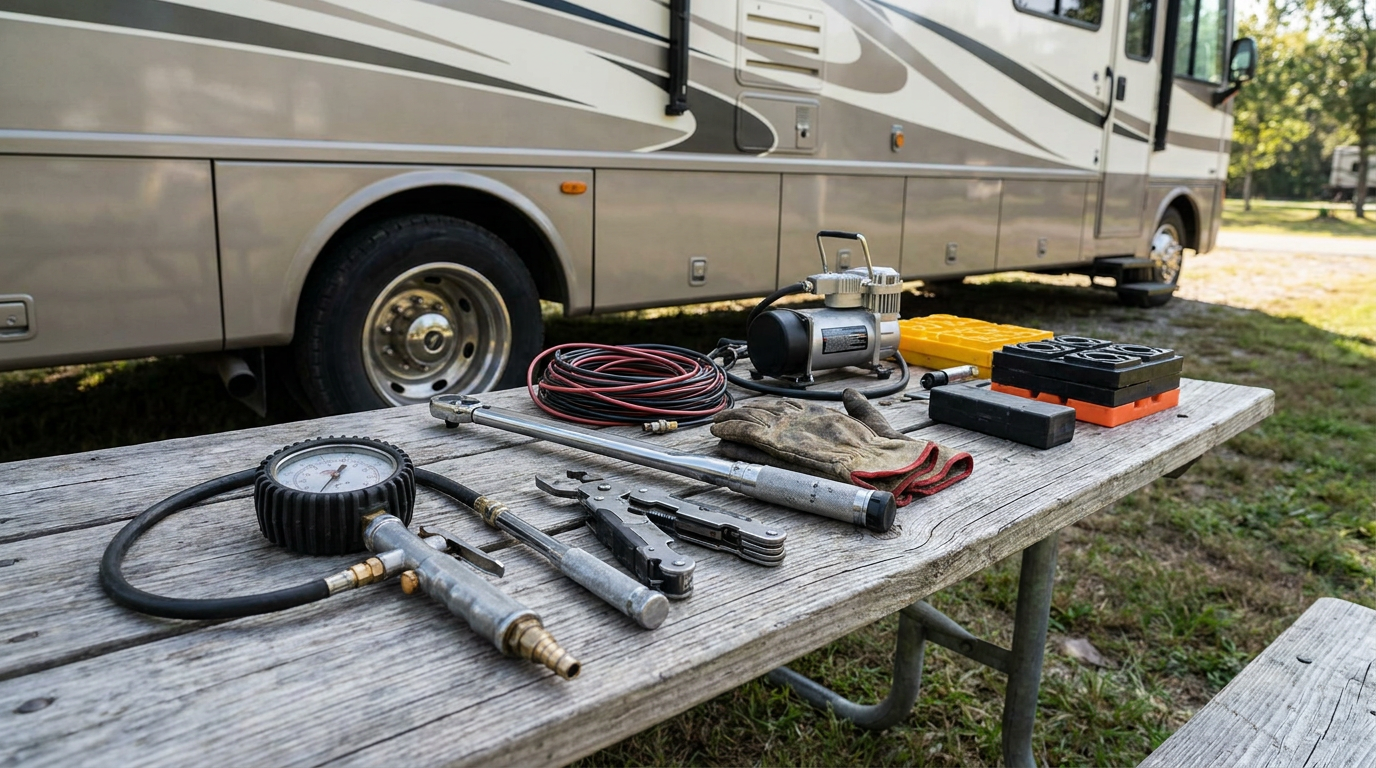
These tools are a bit more specific to your RV lifestyle and can solve problems you wouldn’t encounter in a typical home.
Tire and Wheel Maintenance: Keeping You Rolling Safely
Your RV’s tires are arguably the most critical component for safety and smooth travel. Being able to check and maintain them is a must.
Tire Pressure Gauge
- Why you need ’em: Under-inflated or over-inflated tires are not only dangerous but can also lead to premature wear and poor fuel economy. Regularly checking your tire pressure is non-negotiable.
- What to look for: A good quality digital or pencil-style gauge is accurate. Make sure it can read up to the high pressures your RV tires might need.
Tire Inflator/Deflator (Low Pressure)
- Why you need ’em: Sometimes you need to let a little air out to fine-tune pressure or, more commonly, you need to inflate your tires. A small portable air compressor that plugs into your RV’s 12V system or a larger 120V one is a game-changer.
- What to look for: For occasional use, a 12V compressor is fine for topping up. If you anticipate frequent use or need to inflate from flat, a more robust compressor might be worth considering.
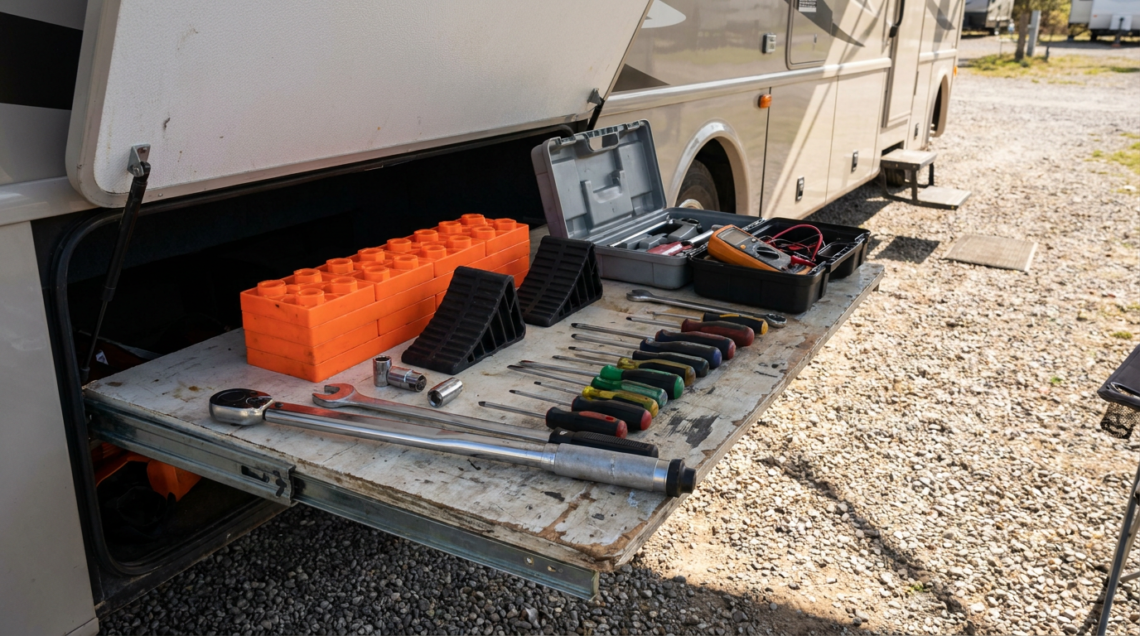
Torque Wrench
- Why you need ’em: This is crucial for properly tightening your RV’s lug nuts. Overtightening or undertightening can lead to serious problems, including wheel detachment.
- What to look for: You’ll need a standard socket set to go with it. Find out the recommended torque specification for your RV’s wheels (it’s usually in your owner’s manual).
Wheel Chocks
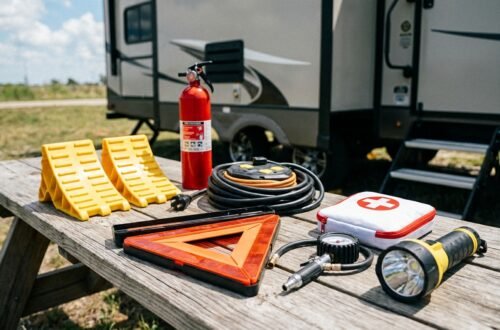
- Why you need ’em: When you park your RV, especially on any sort of incline, wheel chocks are absolutely essential for preventing the vehicle from rolling. They are a fundamental safety item.
- What to look for: Durable rubber or plastic chocks are a good choice. Make sure they’re substantial enough for your RV’s weight.
Propane System Tools: Ensuring Safe Gas Flow
Propane powers many of your RV’s comforts, and its safe use is paramount.
Propane Wrench (often a specialized, larger opening)
- Why you need ’em: Propane hoses and fittings often require a larger wrench with a specific fit. You might need to tighten a connection if you suspect a leak or disconnect a tank.
- What to look for: Many RV stores sell a specific “propane wrench.” It has a larger opening than a standard adjustable wrench and a good grip.
Leak Detector Spray (or Soapy Water)
- Why you need ’em: Always check your propane connections for leaks, especially after connecting or disconnecting a tank. This spray (or a simple mixture of dish soap and water in a spray bottle) will bubble up if there’s a gas leak.
- What to look for: Propane leak detector spray can be purchased at RV supply stores. A DIY soapy water solution works just as well.
RV Specific Adapters and Connectors: Bridging the Gap
Your RV interacts with a lot of different hookups and systems. Having the right adapters is like having a universal key.
Water Hose Adapters
- Why you need ’em: You’ll encounter different campsite water spigots, and sometimes you’ll need to connect your RV hose to things other than a direct spigot. An adapter or two can save you from a dry spell.
- What to look for: A brass garden hose adapter to connect to a standard spigot is essential. You might also want an adapter for connecting to a potable water filter.
Electrical Adapters (30-amp to 50-amp, 15-amp to 30-amp)
- Why you need ’em: Campsites have different electrical hookups. A 50-amp service provides more power, but sometimes you’ll only find a 30-amp or even a standard household 15-amp outlet. These adapters let you safely connect your RV to what’s available.
- What to look for: Get a good quality adapter for the common scenarios you’ll encounter. They’re designed for this purpose and are safe when used correctly.
Sewer Hose Adapters
- Why you need ’em: While most modern sewer hookups are fairly standard, having an adapter can sometimes help you get a more secure or correct fit with different dump station setups or campground facilities.
- What to look for: A universal bayonet adapter for your existing sewer hose is usually sufficient.
The “Nice to Have” Tools: Making Life Easier
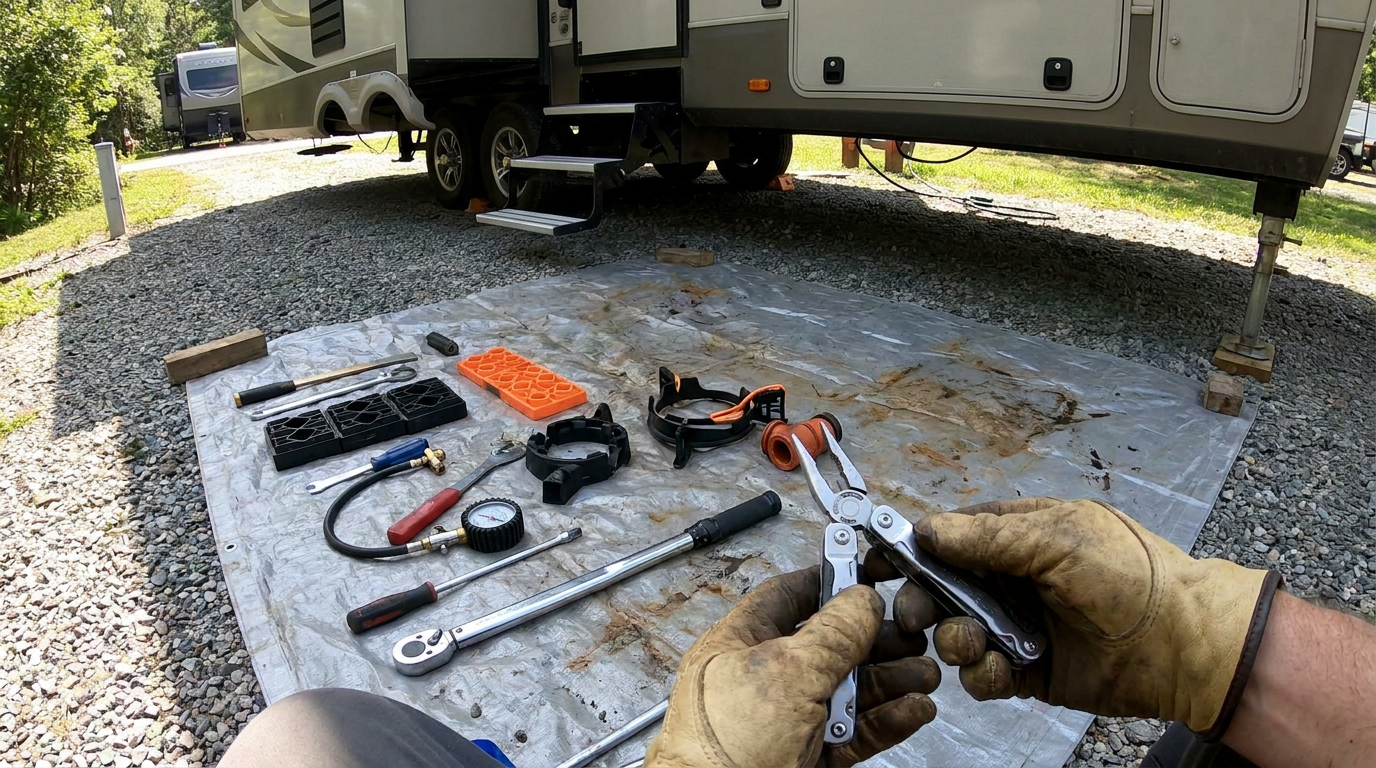
These aren’t strictly emergencies, but they’ll make RV maintenance and repairs much less of a chore.
A Good Toolkit for On-the-Go Repairs
Having these smaller, more specialized items can make a big difference.
Socket Set (Metric and Standard)
- Why you need ’em: For bolts that need more torque than a wrench can provide, a socket set is invaluable. Especially useful if you have a repair involving the chassis or engine components.
- What to look for: A basic set covering both metric and standard sizes with a ratchet handle and a few extensions should suffice for most beginners.
Zip Ties (Various Sizes)
- Why you need ’em: The ultimate temporary fix for endless problems. From securing a loose wire to holding a wobbly trim piece in place until you can do a proper fix, zip ties are incredibly versatile.
- What to look for: A variety pack with different lengths and strengths is handy.
Duct Tape
- Why you need ’em: It’s duct tape. Need I say more? For temporary fixes, securing things, or even as a makeshift bandage (in a pinch!), this stuff is legendary for a reason.
- What to look for: A good quality roll of silver duct tape.
WD-40 or Lubricant Spray
- Why you need ’em: Stuck bolts, squeaky hinges, or needing to clean off sticky residue – lubricant spray is a problem-solver.
- What to look for: A standard can of WD-40 or a similar multi-purpose lubricant.
Work Gloves
- Why you need ’em: Keep your hands clean and protected when you’re working on something greasy or dirty.
- What to look for: A comfortable, durable pair. Leather or synthetic options are good.
Diagnostic and Inspection Tools: Seeing What’s Really Going On
These tools help you understand what’s wrong or how things are working.
Flashlight (Headlamp Recommended)
- Why you need ’em: RVs have nooks and crannies where light doesn’t always reach. Working on anything under the RV, in a dark storage compartment, or just navigating at night requires good light. A headlamp keeps your hands free.
- What to look for: A bright LED flashlight or, even better, an LED headlamp. Make sure you have spare batteries.
Small Mirror
- Why you need ’em: For looking into tight, hard-to-see spaces. Checking for leaks under a sink, inspecting the back of an appliance, or just seeing that dropped screw in a dark corner.
- What to look for: A small, extendable inspection mirror or even a compact vanity mirror.
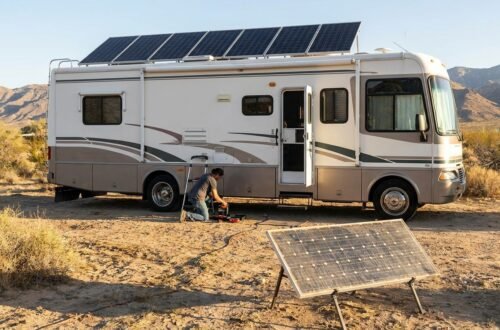
For beginners looking to equip their RV with essential tools, understanding the basics of RV solar systems can greatly enhance their camping experience. A related article that delves into this topic is available at Understanding the Basics of RV Solar Systems, which provides valuable insights on how to harness solar energy while on the road. By combining the right tools with knowledge about solar systems, new RV owners can ensure a more enjoyable and sustainable adventure.
Organizing Your Tools: Keeping It Tidy
| Tool | Description |
|---|---|
| Tire pressure gauge | For checking and maintaining proper tire pressure |
| Leveling blocks | To level the RV on uneven ground |
| Sewer hose kit | For emptying the RV’s waste tanks |
| Basic tool kit | Containing screwdrivers, pliers, and wrenches for minor repairs |
| Water pressure regulator | To protect the RV’s plumbing from high water pressure |
All these tools will be useless if they’re a jumbled mess.
Tool Bag or Small Toolbox
- Why you need ’em: A dedicated bag or box keeps your tools organized, protected, and easy to find. It also prevents them from rolling around the RV while you’re driving.
- What to look for: A soft-sided tool bag with multiple compartments is often ideal for RVs as it can conform to available space. A small, sturdy hard-shell toolbox is also a good option.
Latching Storage Bins
- Why you need ’em: For storing your specialized items like adapters, fuses, or plumbing supplies. Latching bins keep things from spilling out and protect them from moisture and dust.
- What to look for: Clear or labeled bins so you can see what’s inside.
Mount It!
- Why you need ’em: Consider mounting your most frequently used tools (like your tire pressure gauge or a flashlight) in an easily accessible spot using hooks or small storage organizers. This saves time and keeps them from getting lost.
- What to look for: Adhesive hooks, small magnetic strips, or Velcro straps can be incredibly useful for securing tools.
Remember, the goal isn’t to have every tool imaginable, but to have the right tools for the most common RV scenarios. Start with the essentials, and as you gain experience and encounter more specific issues, you can gradually build your collection. Happy trails!
FAQs
What are some essential tools for RV beginners?
Some essential tools for RV beginners include a basic tool kit, tire pressure gauge, leveling blocks, electrical adapters, and a multimeter.
Why is a basic tool kit important for RV owners?
A basic tool kit is important for RV owners because it allows them to make minor repairs and adjustments on the road, saving time and money on professional services.
What is the purpose of a tire pressure gauge for RV owners?
A tire pressure gauge is essential for RV owners to ensure that their tires are properly inflated, which is crucial for safety and fuel efficiency while traveling.
Why do RV owners need leveling blocks?
Leveling blocks are necessary for RV owners to ensure that their vehicle is parked on a level surface, which is important for stability and comfort inside the RV.
What is the significance of electrical adapters and a multimeter for RV owners?
Electrical adapters are important for RV owners to connect to different power sources, while a multimeter allows them to troubleshoot and diagnose electrical issues in their RV.