
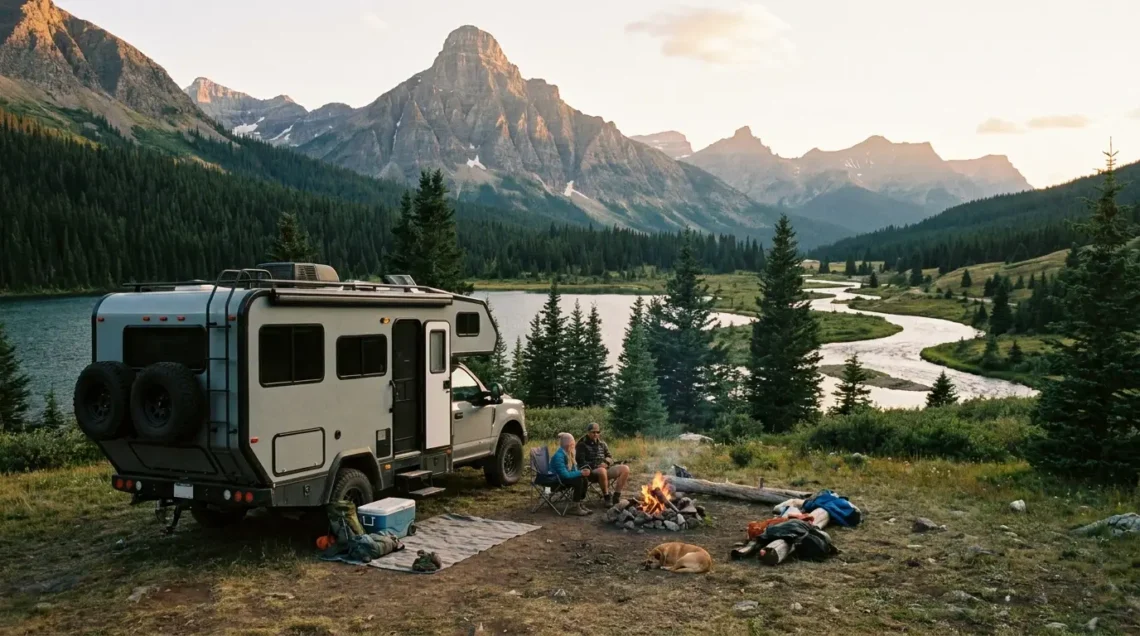
Imagine pulling off the highway into a secluded spot surrounded by stunning desert landscapes or towering pines—with no hookups, no fees, and no crowds. That’s the essence of boondocking, and it’s one of the most rewarding ways to experience the freedom of RV travel. Whether you’re seeking adventure on a budget or simply want to escape the commercialized campground scene, boondocking opens up thousands of possibilities across America’s public lands.
Boondocking means camping in your RV without electrical, water, or sewer connections—typically on public lands like Bureau of Land Management (BLM) properties, National Forests, or private land with permission. It requires more self-sufficiency than traditional campground camping, but the payoff is genuine solitude, lower costs, and access to some of America’s most beautiful remote locations. For beginners, the learning curve is manageable with proper planning and the right knowledge.
Key Takeaways
- Boondocking requires self-sufficiency with water, power, and waste systems—invest in quality batteries and storage capacity before your first trip.
- Public lands like BLM areas offer legal, free camping; always check local regulations and typically stay no longer than 14 days in one location.
- Proper preparation prevents common rookie mistakes—test all systems at home, carry backup supplies, and always have a contingency plan.
- Apps and online resources make finding boondocking spots easier than ever, but offline maps remain essential backup navigation tools.
- Start with short, nearby trips to build confidence and identify what gear and systems actually work for your lifestyle before extended adventures.
What Is Boondocking and Why Should You Try It?
At its core, boondocking represents a shift from traditional campground living to self-reliant camping. You’re responsible for generating your own electricity, managing your water supply, and disposing of your waste without relying on external hookups. This independence comes with genuine rewards—dramatically lower costs, access to remote locations, and a deeper connection to the landscapes you’re exploring.
The financial advantage alone attracts many RVers. While established campgrounds charge $25 to $60 nightly, most boondocking on public lands is completely free. Over a month of travel, that’s a difference of $750 to $1,800. Beyond dollars, boondockers consistently report experiencing solitude impossible to find in crowded RV parks. You wake up to wildlife, unobstructed starscapes, and landscapes ranging from desert canyons to alpine meadows.
However, boondocking isn’t pure freedom without boundaries. You need adequate RV batteries for boondocking to power essential systems, sufficient freshwater storage, and waste capacity. Furthermore, you must understand and respect local regulations. BLM land typically allows 14-day stays in one location, while National Forest rules vary by region. The key is matching your RV’s capabilities with realistic trip durations.
The Real Costs of Boondocking
While boondocking itself is free, supporting infrastructure carries costs. Quality solar panels, lithium or AGM battery upgrades, and reliable water filtration systems represent significant upfront investments—typically $2,000 to $8,000 depending on your setup ambitions. The essential gear for new RVers includes items beyond basic RV ownership.
Additionally, fuel costs remain constant whether you’re at a campground or boondocking remotely. Propane consumption increases slightly in colder climates where RVs lack electrical heating. Despite these expenses, most boondockers break even financially within 2-3 months compared to traditional campground camping patterns.
Essential Systems and Supplies You’ll Need
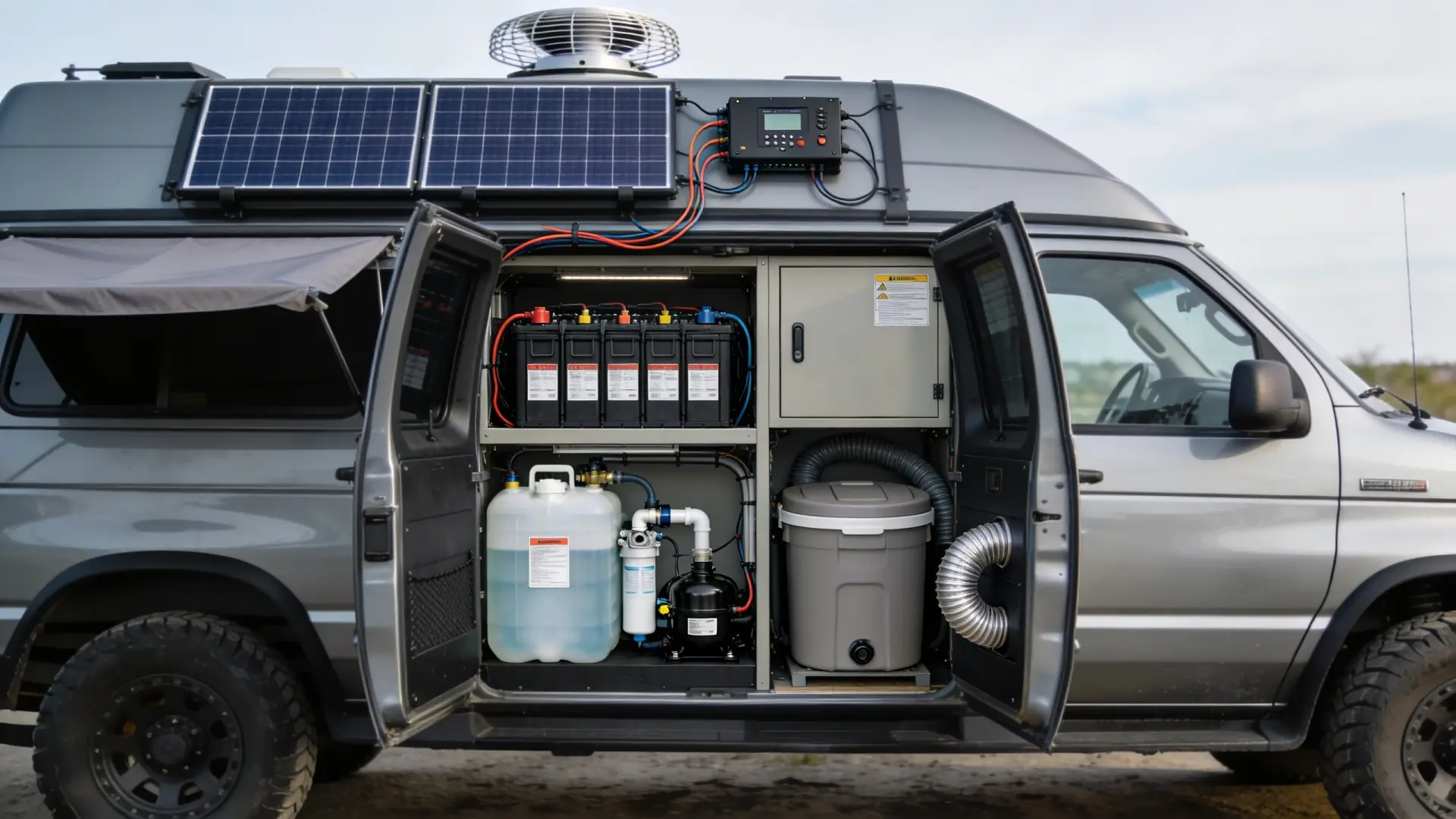
Before your first boondocking adventure, assess your RV’s capabilities honestly. Not every RV is equally suited to off-grid camping, and understanding your rig’s limitations prevents frustration and safety issues. The three critical systems—power, water, and waste—determine how long you can comfortably stay boondocking.
Power Systems and Battery Requirements
Your batteries are the heart of boondocking independence. Most stock RVs come with a single 100-amp-hour lead-acid battery providing roughly 1,200 watt-hours of usable power—barely sufficient for one night of moderate use. This is why many boondockers upgrade their battery banks substantially.
You have two primary options: AGM (Absorbent Glass Mat) batteries or lithium battery systems. AGM batteries are affordable and durable, while lithium provides greater storage capacity and faster charging. Understanding how to wire RV batteries in series versus parallel becomes essential when expanding your battery bank. For beginners, proper battery bank sizing prevents overshooting budget while ensuring sufficient power.
Consider your actual power needs realistically. A typical boondocking day consuming LED lighting, water pump operation, laptop charging, and minimal refrigeration runs 30-50 amp-hours. This means a 200-amp-hour battery bank with 50% depth-of-discharge safety margin provides one comfortable night, two nights with conservative use, or three nights when powered by solar panels.
Water Management Systems
Most RVs include a freshwater tank, but boondockers must understand their tank capacity and consumption patterns carefully. The average person uses 5-10 gallons daily for basic hygiene and cooking. A 40-gallon tank supports only four to eight days of independent camping.
To extend boondocking duration, many RVers install additional freshwater containers—gravity-fed external tanks or portable water carriers. Water conservation becomes second nature: shorter showers, strategic dishwashing, and dual-purpose water usage (wash water for plants) maximize your supply. A water filter system prevents contamination from questionable sources.
Waste Handling Capacity
Your black water (toilet) tank capacity directly limits boondocking duration. A standard 20-gallon tank supports roughly three days of normal use for one or two people. Gray water (sink and shower) tanks fill faster—approximately two to four days—since gray water volume always exceeds black water volume.
Some boondockers install additional gray water tanks or empty tanks more strategically to extend trips. For extended boondocking beyond a week, understanding your waste management limitations and having a plan prevents unpleasant situations where you’re forced to break camp prematurely.
Finding the Perfect Boondocking Spot
Technology has revolutionized boondocking spot discovery. Where pioneers once relied on hand-drawn maps and word-of-mouth, modern boondockers access thousands of detailed spot listings through apps and websites. However, knowing where to look remains crucial for beginners.
Public Land Resources
BLM land comprises the largest boondocking resource in America—roughly 245 million acres managed for multiple uses, including recreation. Most BLM land allows free dispersed camping with minimal restrictions. National Forests similarly permit boondocking, though specific rules vary by forest district. BLM boondocking rules typically allow 14-day stays, though some areas have stricter limitations.
Government websites—blm.gov and fs.usda.gov—provide official information, though interfaces can feel outdated. These sites list seasonal closures, fire restrictions, and specific area regulations that could affect your plans. Always verify current restrictions before traveling to any specific location.
Digital Discovery Tools
Mobile apps have transformed boondocking accessibility. The best boondocking apps for finding free campsites include iExit, FreeRoam, iOverlander, and AllStays. These platforms aggregate crowdsourced spot reviews, photo galleries, and practical details like cell reception quality and water availability.
When evaluating potential spots through apps, examine recent reviews carefully. A spot perfect three months ago might have deteriorated due to overuse or become inaccessible due to gate closures. Reading detailed comments about road conditions, water sources, and safety concerns prevents unpleasant surprises.
Additionally, discovering how to find free camping spots through BLM and hidden locations involves combining official resources with community platforms. Cross-referencing multiple sources provides the most reliable information.
Scouting Strategies
Experienced boondockers use a strategic approach: research 4-5 potential spots before arrival, with alternative options in case your first choice is full or unsuitable. Arrive early—mid-afternoon—to claim good spots before sunset. Late-afternoon arrivals often mean settling for less-ideal locations.
When scouting in person, look beyond surface appeal. Check cell phone reception, water sources, and whether the site drains properly during rain. A gorgeous meadow becomes a muddy nightmare after precipitation. Confirm terrain accommodates your RV safely—steep slopes damage slide-outs and create leveling nightmares.
| Boondocking Resource Type | Best For | Cost |
|---|---|---|
| BLM Land | Remote camping, extended stays, diverse landscapes | Free |
| National Forests | Forested areas, mountain camping, cooler climates | Free (dispersed) |
| Boondocking Apps | Quick spot discovery, reviews, offline maps | $0-$50/year |
| Harvest Host | Unique experiences at farms, wineries, attractions | $99/year membership |
| Private Land | Established boondocking communities, amenities | $5-$25/night |
Water, Power, and Waste Management
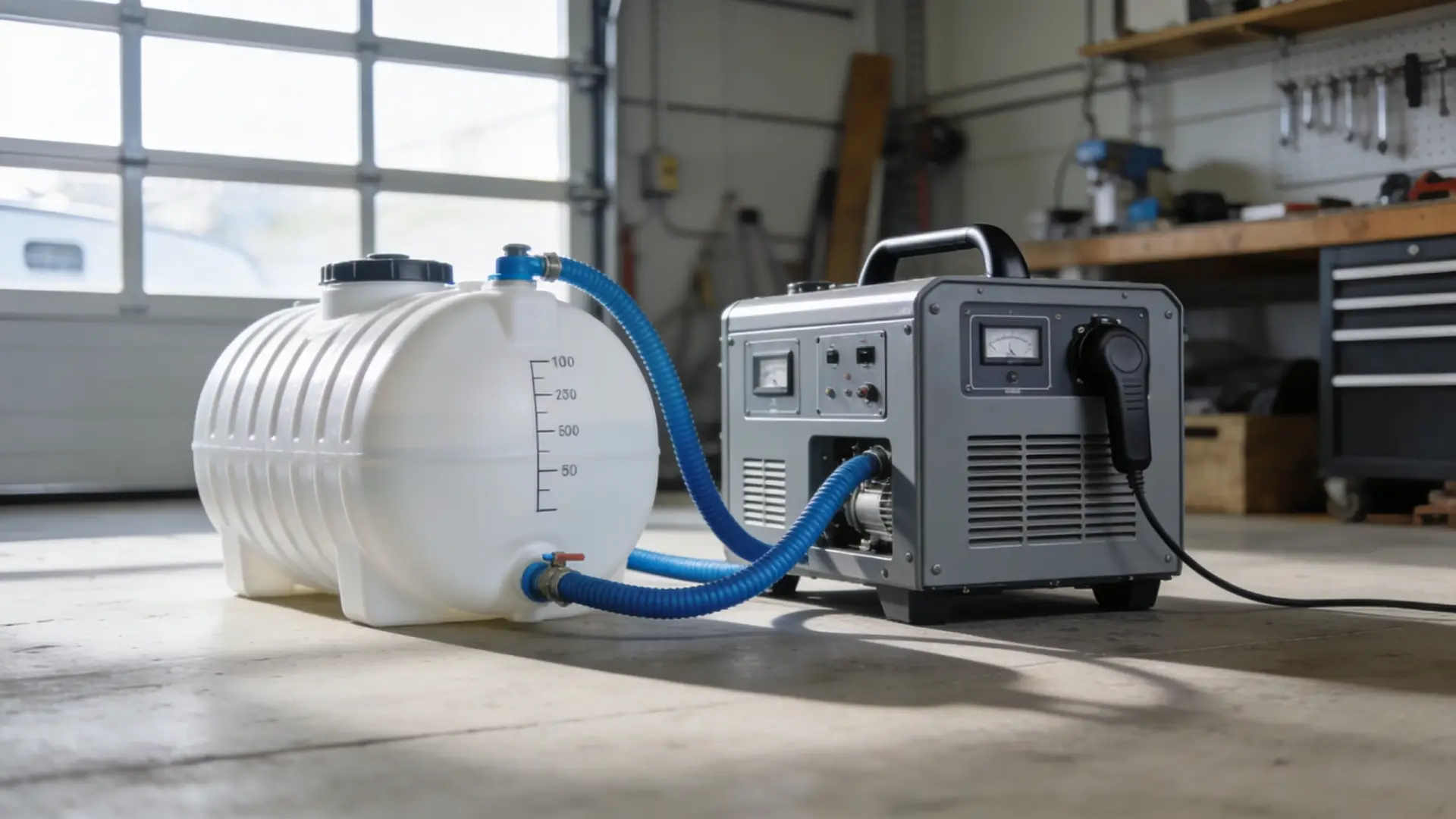
Successfully boondocking depends on mastering the daily management of three interconnected systems. Beginners often underestimate consumption rates and discover mid-trip that they’ve miscalculated available resources. Practical experience teaches better lessons than theoretical planning.
Daily Water Conservation Tactics
Water is your most limited resource. While you can generate electricity through solar panels and extend waste holding, you cannot manufacture freshwater easily. Conservation becomes intuitive after a few boondocking trips, but beginners benefit from concrete strategies:
- Turn off shower water while soaping—use pump spray bottles for efficient hand washing
- Brush teeth with minimal water, using collected water for plant watering
- Cook efficiently with one-pot meals reducing dishwashing volume
- Collect water running while waiting for hot water—use it for plants or cleaning
- Use biodegradable soaps suitable for gray water greywater systems
Additionally, locate reliable water sources before entering extended boondocking. Some BLM areas have seasonal water stations. Nearby towns with public water spigots provide refill opportunities. Harvest Host locations sometimes permit water fills in exchange for staying overnight.
Power Management Strategies
Without external power sources, every amp-hour of battery capacity becomes precious. Successful boondockers develop conscious energy habits. LED lighting replaces power-hungry incandescent bulbs. Water heaters switch to propane mode rather than electric operation. Refrigeration adapts to propane absorption refrigerators rather than drawing constant electrical load.
Solar panels transform power management by replenishing batteries during daylight. Even modest 200-watt solar arrays significantly extend boondocking capability, though cloudy weather and winter angles reduce effectiveness. Understanding how long RV batteries reliably last off-grid helps set realistic expectations for your specific system configuration.
Monitor battery voltage obsessively. When voltage drops below 12.0V, you’ve approached dangerous discharge depths that damage batteries. Recognize warning signs—dimming lights, weak water pump operation, slow refrigerator cooling—indicating depleted reserves requiring immediate power conservation.
Waste System Best Practices
Black water requires careful management. Use RV-safe toilet paper dissolving quickly in tanks. Regular tank treatments with enzyme-based products aid decomposition and prevent odor problems. Never dump black water into gray water systems or onto land.
Gray water from sinks and showers requires different handling. Some boondockers dump gray water responsibly into vegetation away from water sources. Check local regulations—some jurisdictions prohibit gray water dumping entirely. Install a separate gray water tank if extended boondocking away from dump stations is your goal.
Full tanks force camp breaking regardless of desire to stay longer. Monitor tank levels closely and plan accordingly. Know the nearest dump stations along your route and schedule accordingly.
Safety and Legal Considerations
Boondocking on public land feels like complete freedom, but boundaries and safety considerations require respect. Understanding legal requirements prevents citations, while practical safety measures protect your wellbeing and property in remote locations.
Understanding Land Access Rights
BLM land permits dispersed camping, but “dispersed” doesn’t mean unrestricted. Check before traveling that your desired area permits camping. Some BLM parcels prohibit overnight stays. Wilderness areas never permit vehicles. Certain seasonally sensitive areas close during breeding seasons. Understanding the eight boondocking rules on BLM land prevents legal issues.
The 14-day rule applies nationwide on BLM land, though some areas impose shorter limits. After 14 days (or whatever local maximum applies), you must relocate at least five miles before returning. BLM rangers periodically check dispersed camping areas, and violating stay limits risks citations with $130+ fines.
Private land access requires explicit permission. Never assume open gates mean welcome access. Seek out landowners and ask directly. Many private landowners happily accommodate boondockers willing to respect their property and leave no trace.
Remote Safety Protocols
Solitude has inherent risks. Establish a check-in system with friends or family—someone should know your location and expected contact schedule. When exploring on foot, carry communication devices. Cell coverage is unreliable in truly remote areas, but satellite messengers provide emergency contact capability.
Situational awareness prevents problems. Notice other campers when arriving. Trust your instincts—if a location feels unsafe, leave immediately. Keep RV doors locked when unoccupied. Vary your routine rather than establishing predictable patterns.
Mechanical failures in remote locations require preparedness. Carry basic spare parts—alternator belts, hoses, fuses, water pump seals. A basic toolkit enables simple repairs. Triple-A or RV roadside assistance becomes invaluable insurance against costly towing from remote locations.
Emergency Preparedness
Create a detailed emergency kit including first aid supplies, backup medications, water purification tablets, and emergency food. Store important documents—vehicle registration, insurance, medical records—both physically and digitally. Download offline maps covering your travel regions; cell service failures could leave GPS navigation useless otherwise.
Weather monitoring matters even in seemingly stable conditions. Sudden storms in remote areas pose serious hazards. Check weather forecasts before trips and monitor conditions daily. Know evacuation routes and shelter locations near your boondocking sites.
Getting Started: Your First Boondocking Trip
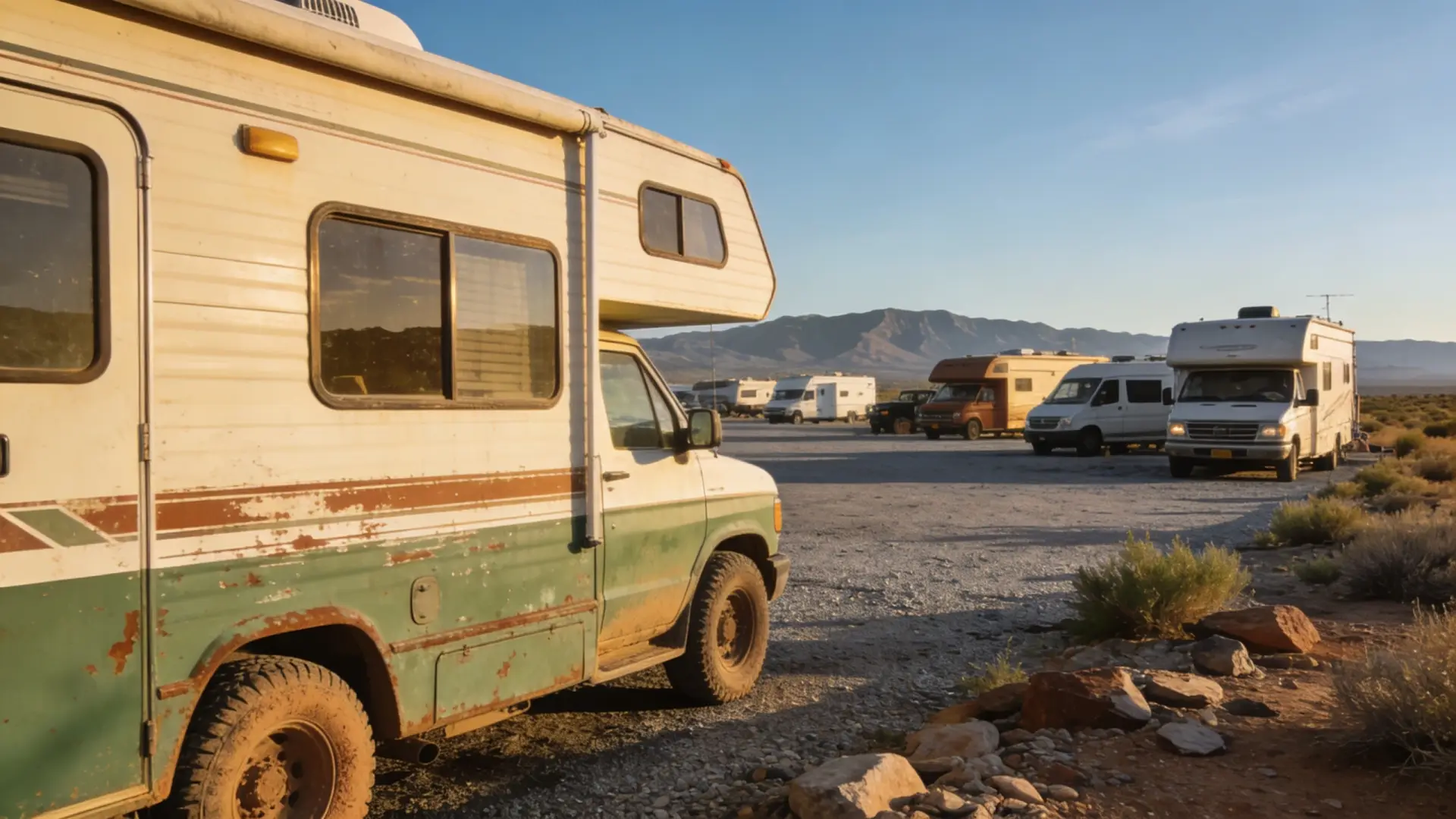
Planning transforms boondocking dreams into reality. A successful first trip builds confidence and identifies which systems actually perform as expected. Rather than ambitious month-long adventures, start modestly with nearby, achievable trips.
Pre-Trip System Testing
Before departing, test every system at home. Run your RV without hookups for a weekend. Operate water pumps, check battery voltage under load, verify propane heating functions, and confirm waste tanks empty properly. Identify any issues in your driveway rather than discovering them 50 miles from civilization.
Conduct a thorough first RV trip checklist covering mechanics, safety systems, and comfort amenities. Test your generator at home—many boondockers arrive at remote sites only discovering their backup power source won’t start. Check tire pressure, fluid levels, and battery condition.
Practice setup procedures. Deploy awnings, extend slide-outs, activate water systems, and verify leveling jacks work properly. Familiarity prevents frustration when setting camp at sunset on your actual boondocking trip.
Strategic Trip Planning
Your first trip should feel manageable. Choose a location within 100 miles of home with established water sources and reasonable cell reception. Plan a 3-5 day duration—long enough to experience genuine boondocking but short enough that minor issues won’t derail the adventure.
Create a detailed packing list beyond standard camping gear. Include extra propane, water treatment tablets, backup fuses, hose connections, and repair supplies. Overestimate water consumption and underestimate power availability—conservatives rarely regret over-preparation.
Share your itinerary with someone responsible. Include your boondocking spot location, arrival date, and expected departure date. Regular contact check-ins provide crucial safety redundancy.
Learning From Experience
Keep a detailed trip journal noting water consumption, power usage, temperature fluctuations, and system performance. Document what worked smoothly and what frustrated you. This real-world data proves invaluable when planning subsequent trips and upgrading systems.
After your first trip, evaluate honestly. Did battery power last as expected? Did water supply meet your needs? Were waste tanks manageable? Did you feel unsafe? Your experience identifies whether boondocking suits your temperament and which systems require upgrades.
Common first-timer mistakes include underestimating water consumption, overestimating battery capacity, and arriving too late for good camping spots. These aren’t failures—they’re data points informing future trips. Successful boondockers iterate constantly, refining their approach based on accumulated experience.
As you gain confidence, gradually extend trip durations and venture further from civilization. The boondocking community is remarkably generous with advice. Online forums, local RV clubs, and fellow boondockers in remote locations often share tips, water source locations, and encouragement. Embrace this community—it amplifies the joy of off-grid exploration while providing practical knowledge accumulated over decades of collective experience.
Frequently Asked Questions
Can you boondock with any RV?
Most RVs can boondock, but your experience depends heavily on your RV’s water, waste, and power capacity. Small travel trailers with minimal tank capacity handle 2-3 day trips comfortably, while larger Class A motorhomes with substantial tanks support week-long boondocking. The key is understanding your specific RV’s limitations and planning trips accordingly. Upgrading battery systems and adding freshwater capacity makes nearly any RV suitable for extended boondocking adventures.
Is boondocking legal everywhere?
Boondocking on BLM land is legal nationwide, typically allowing 14-day stays in one location followed by mandatory relocation. National Forests permit boondocking with specific regional restrictions varying by forest district. Private land requires explicit owner permission. State lands and county property have varying rules—some prohibit camping while others permit it. Always verify current regulations before traveling; the Bureau of Land Management (Wikipedia) provides comprehensive information about public land access rules.
How much does boondocking actually cost?
Boondocking on public land itself is free, eliminating $25-$60 nightly campground fees. However, supporting infrastructure requires investment—quality batteries ($1,500-$4,000), solar panels ($1,000-$3,000), and water systems ($500-$1,500) represent typical upgrades. Operating costs include fuel and propane, which remain consistent regardless of camping type. Many boondockers break even financially within 2-3 months compared to traditional campground costs, after which they’re essentially camping free.
What’s the biggest mistake beginners make when boondocking?
Underestimating water consumption is the most common beginner error. Most people discover their 40-gallon freshwater tank depletes in 3-4 days rather than the week they anticipated. The second major mistake is overestimating battery capacity without solar support—stock RV batteries rarely provide power for more than one comfortable evening of usage. Avoid these problems by testing your systems at home before your first trip and honestly assessing tank capacities and actual power consumption.
Do I need cellular service to boondock safely?
While cellular service is convenient, it’s not essential for safe boondocking. Download offline maps before your trip using apps like AllMaps or Gaia GPS. Establish check-in protocols with family or friends regardless of service availability. For truly remote boondocking, consider satellite messengers like Garmin InReach providing emergency communication without cell dependency. The combination of offline maps, mechanical preparedness, and backup communication plans enables safe boondocking in areas with zero cell coverage.


One comment on “Boondocking for Beginners (Complete Guide)”