
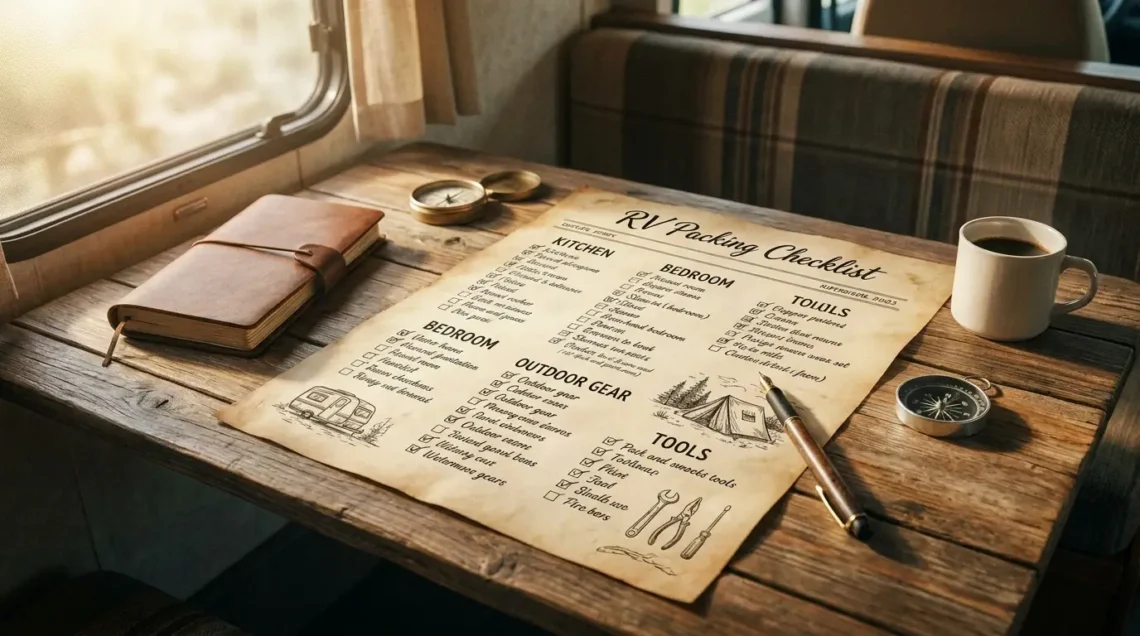
Most first-time RVers make the same mistakes: forgetting a water pressure regulator, discovering their RV won’t fit under a bridge, or arriving at a campground only to realize they booked the wrong dates. A solid checklist prevents these costly oversights and transforms what feels like an impossible amount of prep work into a manageable series of steps. The difference between a stressful trip and a great one often comes down to whether you spent 90 minutes with a checklist before you left.
Your first RV trip checklist should cover pre-departure preparations, essential supplies, safety equipment, and systems checks that keep your vehicle running smoothly. This guide walks you through each category systematically, ensuring nothing gets left behind in your driveway.
Table of Contents
Pre-Trip Planning and Reservations
Start your preparation at least two to three weeks before departure. Research campgrounds along your route and make reservations, especially during peak season when spots fill quickly. Check campground amenities to confirm they match your needs, including hookup types, dump stations, and size restrictions for your vehicle.
Create a detailed itinerary with driving distances between stops. Limit your daily driving to 200-300 miles when you’re new to handling an RV—this gives you time to learn how the vehicle handles, find your campsite, and set up without exhaustion. Factor in extra time for setup and breakdown at each location. Map out fuel stops since RVs require more frequent refueling than standard vehicles, and not all gas stations accommodate larger rigs.
Download helpful navigation apps and consider investing in apps designed for finding campsites if you plan to mix traditional campgrounds with more flexible options. Verify your route doesn’t include low clearance bridges or restricted roads that prohibit RVs. Many GPS systems offer RV-specific routing that accounts for vehicle height and weight.
Vehicle Systems Check and Maintenance
Conduct a thorough inspection of all major systems before hitting the road. Test your propane system for leaks using soapy water on connections—bubbles indicate escaping gas. Check tire pressure on both the RV and any towed vehicle, as improper inflation causes handling problems and increased wear. Inspect tire tread depth and sidewalls for cracks or damage.
Run through all mechanical systems including brakes, lights, turn signals, and backup cameras. Test your generator under load for at least 30 minutes to ensure it operates reliably when you need power off-grid. Verify that your battery charges properly both from shore power and while driving.
Critical System Tests
Before departure, examine these often-overlooked components:
- Water pump operation and pressure levels
- Holding tank sensors and dump valve functionality
- Slide-out mechanisms and seals
- Roof condition and potential leak points
- Awning deployment and retraction
Reference a comprehensive maintenance checklist to catch issues that might strand you miles from help. Addressing small problems at home saves considerable hassle on the road.
Essential Supplies and Equipment
Pack specialty items unique to RV travel that you won’t find at typical campgrounds. Bring leveling blocks or ramps, since perfectly level sites are rare and your refrigerator requires proper leveling to function efficiently. Include wheel chocks to prevent rolling on sloped surfaces.
Carry multiple extension cords rated for outdoor use, along with a surge protector to safeguard your electrical system from campground power fluctuations. A water pressure regulator prevents damage from excessively high campground water pressure that can burst hoses or fittings. Pack a drinking water hose specifically labeled for potable water—never use a standard garden hose.
Connection and Setup Gear
These items prove essential at virtually every campsite:
- Sewer hose kit with multiple extensions and clear elbow adapter
- Rubber gloves specifically for handling sewer connections
- 30-amp to 50-amp electrical adapters (depending on your RV requirements)
- Extra propane tanks or knowledge of refill locations
- Basic tool kit with screwdrivers, pliers, and adjustable wrenches
Kitchen and Living Area Essentials
Stock your kitchen with items secured for travel to prevent damage from road vibrations. Use non-slip shelf liners and ensure cabinet latches function properly. Bring lightweight, stackable dishes and cooking gear that maximizes limited storage space.
Pack essential cooking supplies including pots, pans, utensils, and basic spices. Avoid overloading cabinets with unnecessary gadgets. Consider specialized RV kitchen equipment designed for compact spaces. Stock paper plates and disposable cups for quick meals when you want minimal cleanup.
Bring bedding, towels, and toiletries as you would for any trip. Include cleaning supplies like all-purpose cleaner, paper towels, and trash bags. A small broom and dustpan help maintain cleanliness in tight quarters. Pack outdoor items like folding chairs, a small table, and an outdoor rug to create comfortable living space outside your RV.
Climate Control Considerations
Prepare for varying weather conditions regardless of season. Bring fans for air circulation on warm nights when you want to conserve generator fuel. Pack extra blankets for unexpected cold snaps. A small space heater provides supplemental warmth in shoulder seasons, though always follow safety guidelines for propane and electrical loads.
Hookups and Utility Connections
Understanding hookup procedures prevents costly mistakes and water damage. When connecting to city water, always attach your pressure regulator first, then connect the hose to the campground spigot. Turn on water slowly and check for leaks at all connection points before pressurizing your system fully.
For electrical hookups, inspect the campground pedestal before plugging in. Look for burn marks, loose outlets, or damaged covers that signal potential problems. Use your surge protector between the pedestal and your RV cord. If the tester indicates wiring issues, notify campground staff before connecting.
Sewer Connection Best Practices
Proper sewer hookup prevents unpleasant situations. Follow this sequence every time:
- Put on rubber gloves dedicated to this task
- Connect sewer hose to RV outlet first, ensuring a secure fit
- Extend hose to campground connection, creating a downward slope
- Keep dump valves closed until you’re ready to empty tanks
- Empty black tank first, then gray tank to flush the hose
A common mistake involves leaving valves open continuously, which causes solids to accumulate. Instead, let tanks fill to at least two-thirds before dumping for proper flow and cleaning action.
Safety and Emergency Preparedness
Equip your RV with safety devices required by law and common sense. Install working smoke detectors, carbon monoxide detectors, and a fire extinguisher rated for multiple fire types. Test all detectors before departure and pack extra batteries. Know the location of emergency exits and ensure everyone in your party understands evacuation procedures.
Create an emergency kit containing first aid supplies, flashlights, batteries, and a battery-powered radio. Include road flares or reflective triangles for roadside emergencies. Pack jumper cables, tire repair kit, and basic spare parts like fuses and light bulbs. Maintain a list of emergency contacts including roadside assistance numbers and your insurance provider.
Download offline maps of your route in case you lose cellular signal. Carry physical maps as backup navigation. Share your itinerary with a trusted contact who isn’t traveling with you. Check weather forecasts regularly and have contingency plans for severe conditions.
Documentation and Insurance
Organize important documents in a waterproof folder:
- RV registration and insurance cards
- Driver’s licenses and medical insurance information
- Campground confirmation numbers
- Vehicle operation manuals and warranty information
- List of medications and prescriptions
If you’re still deciding between rental and ownership, reviewing financial considerations helps clarify what coverage you need for your specific situation.
Departure Day Final Checks
Walk through your RV systematically on departure day using this proven sequence. Start inside by securing all loose items that could shift during travel. Close and latch all cabinets and drawers. Ensure the refrigerator operates on propane or is properly secured if running on battery power during transit.
Retract slide-outs completely and verify they’re locked in travel position. Raise and secure stabilizer jacks. Disconnect and store all utility connections, including power cord, water hose, and sewer hose. Check that dump valves are closed and caps are secured. Lower and latch your awning securely.
External Walkthrough
Complete a 360-degree inspection around your vehicle:
- Verify all storage compartments are closed and locked
- Check that steps are retracted and entry door closes properly
- Inspect tire condition one final time
- Ensure all lights and signals function correctly
- Confirm tow vehicle is properly hitched with safety chains crossed
Before pulling away, check mirrors and backup camera functionality. Drive slowly through the campground, testing brakes in a safe area. This catches any issues while help is still nearby rather than discovering problems on the highway.
Keep in mind that regular maintenance becomes even more critical after your first trip. Planning ahead for annual RV maintenance tasks prevents small issues from becoming major repairs down the road.
Your first RV adventure doesn’t have to feel overwhelming. By working through this checklist before departure, you’ll catch the small details that separate smooth trips from stressful ones. Every experienced RVer started exactly where you are now. The key is thorough preparation combined with flexibility when unexpected situations arise. Safe travels.



9 Comments on “Best First RV Trip Checklist”