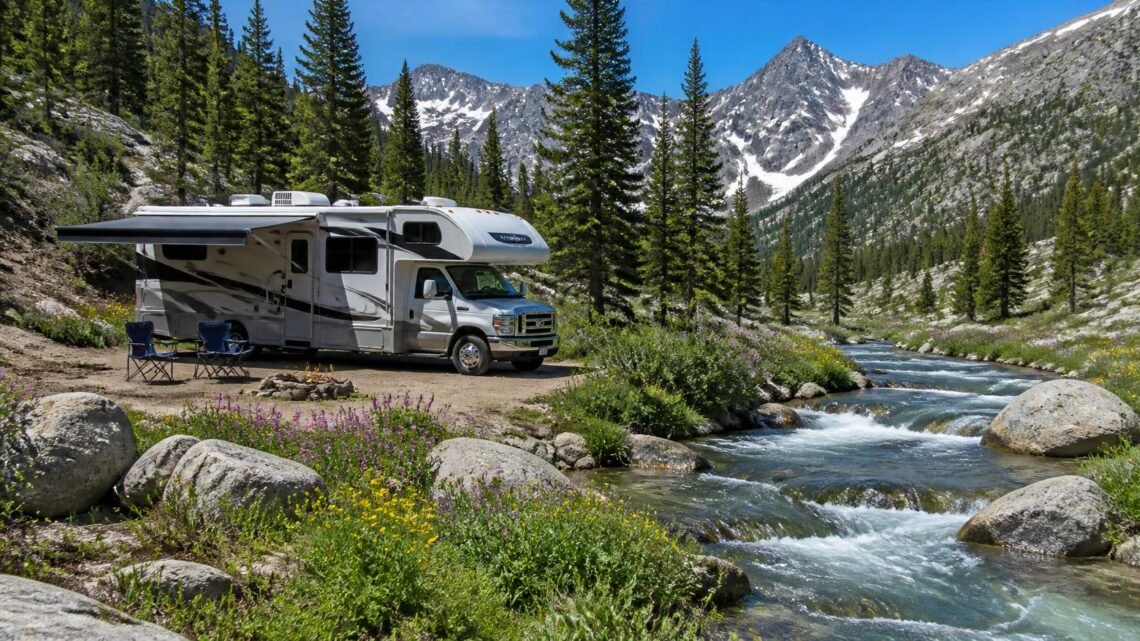
Finding free camping resources is a game-changer for RVers, and thankfully, there are some seriously useful resources out there to help you do just that. The main idea is leveraging public lands, like National Forests or BLM (Bureau of Land Management) areas, alongside a few clever apps and websites designed to pinpoint these gems. It’s all about knowing where to look and what tools to use to make your road trip budget-friendly and adventurous.
Let’s dive into the core tools you’ll be using to locate those sweet, sweet boondocking spots. These aren’t just lists; they’re communities, map overlays, and databases built by RVers for RVers.
Table of Contents
The Power of Apps
Mobile apps are arguably your most important companion for finding free camping on the go. They bring a wealth of information right to your fingertips, often with offline capabilities, which is crucial when you’re way out there.
iOverlander
This app is a goldmine. It’s user-generated, meaning fellow travelers contribute and update information on campsites, water sources, dump stations, and even propane refills. What makes it stand out is the detailed reviews, photos, and tips from actual users. You can filter by amenities (or lack thereof, for boondocking), view recent activity, and get a good sense of the road conditions to the site. It’s available offline too, which is a massive plus when you’re off the grid.
Campendium
Another hugely popular option, Campendium focuses heavily on reviews and photos, making it easy to see what a spot is really like before you drive all that way. They categorize sites by type – free, national parks, state parks, etc. – and offer helpful filters. While it also lists paid sites, its strength lies in the depth of information for free spots, including cell service reports and suitability for different rig sizes.
FreeCampsites.net
As the name suggests, this website (which functions well on mobile browsers) is all about free camping. It’s a no-frills, community-driven database. You’ll find basic information, directions, and user comments. It’s a fantastic starting point for finding potential spots and then cross-referencing with other apps for more detailed info. It might not be as slick as iOverlander or Campendium, but its focus on free sites is its undeniable strength.
Websites and Mapping Tools
Beyond dedicated apps, there are robust websites and even general mapping tools that become invaluable in your quest for free camping.
Bureau of Land Management (BLM) and National Forest Service (NFS) Websites
These are the official sources for land management, and they are crucial for understanding where you can and cannot camp for free. While their websites might not always be the most user-friendly for finding specific spots, they provide invaluable maps and regulations.
- BLM.gov: Look for “recreation” sections and then “camping” or “dispersed camping.” You can often find PDFs of Motor Vehicle Use Maps (MVUMs) here, which are essential for navigating BLM land legally.
- FS.USDA.gov: Similar to BLM, navigate to the “recreation” section for individual National Forests. They’ll have details on dispersed camping regulations, fire restrictions, and any permit requirements for specific areas.
The key takeaway here is that BLM and NFS lands are your primary targets for free dispersed camping. Learning to navigate their official sites will save you headaches and ensure you’re compliant with regulations.
Google Maps/Satellite View
Don’t underestimate the power of Google Maps. Once you’ve identified a general area (say, a National Forest or BLM region), switch to satellite view. You can often spot dirt roads, pull-offs, and clearings that could indicate potential boondocking sites. Look for areas that seem accessible but not heavily trafficked. Combined with MVUMs, this becomes a powerful reconnaissance tool.
For those interested in maximizing their RV experience, understanding the financial implications of RV ownership is crucial. A related article that delves into this topic is “Renting vs. Owning an RV: Which is the Better Financial Choice?” This piece provides valuable insights into the costs associated with both renting and owning an RV, helping readers make informed decisions about their camping adventures. You can read the article here: Renting vs. Owning an RV.
Understanding the Rules of the Road (and the Dirt)
Finding a spot is one thing; knowing how to legally and responsibly use it is another. Free camping, often called dispersed camping or boondocking, comes with a set of unwritten (and sometimes written) rules. You can read more on rules in this article: 8 Boondocking Rules BLM Land
Dispersed Camping Regulations
This is where the official land management websites (BLM, NFS) become critical. Each area can have slightly different rules, but some general guidelines apply.
Stay Limits
Most public lands have stay limits, typically 14 days within a 30-day period in one location. This is to prevent people from setting up permanent residence and to allow for natural regeneration of the area. Always check the specific rules for the area you’re in.
Fire Restrictions
Pay close attention to fire restrictions, especially during dry seasons. A single spark can devastate vast areas. Many places prohibit campfires entirely, and even when allowed, you might need a permit or specific type of fire pit. Apps like iOverlander often include user-reported fire restriction updates, but always double-check official sources.
Leave No Trace Principles
This isn’t just a suggestion; it’s the golden rule of dispersed camping. Pack out everything you pack in, including trash, food scraps, and even human waste (dig a cathole at least 6-8 inches deep and 200 feet from water sources, trails, and campsites, or pack it out). Leave the area cleaner than you found it. This ensures these beautiful free spots remain accessible for everyone.
Motor Vehicle Use Maps (MVUMs)
These maps are essential for navigating National Forests and some BLM lands. They clearly indicate which roads are open to motorized vehicles, which are closed, and where dispersed camping is permitted along those roads. Using an MVUM prevents you from accidentally trespassing or driving down a road that’s unsuitable for your rig or off-limits.
- How to get them: Many National Forest offices offer paper MVUMs, or you can download digital versions from their websites. Apps like Avenza Maps allow you to download georeferenced MVUM PDFs that work with your phone’s GPS even without cell service. This is a game-changer.
Beyond the Digital: Old-School Tips
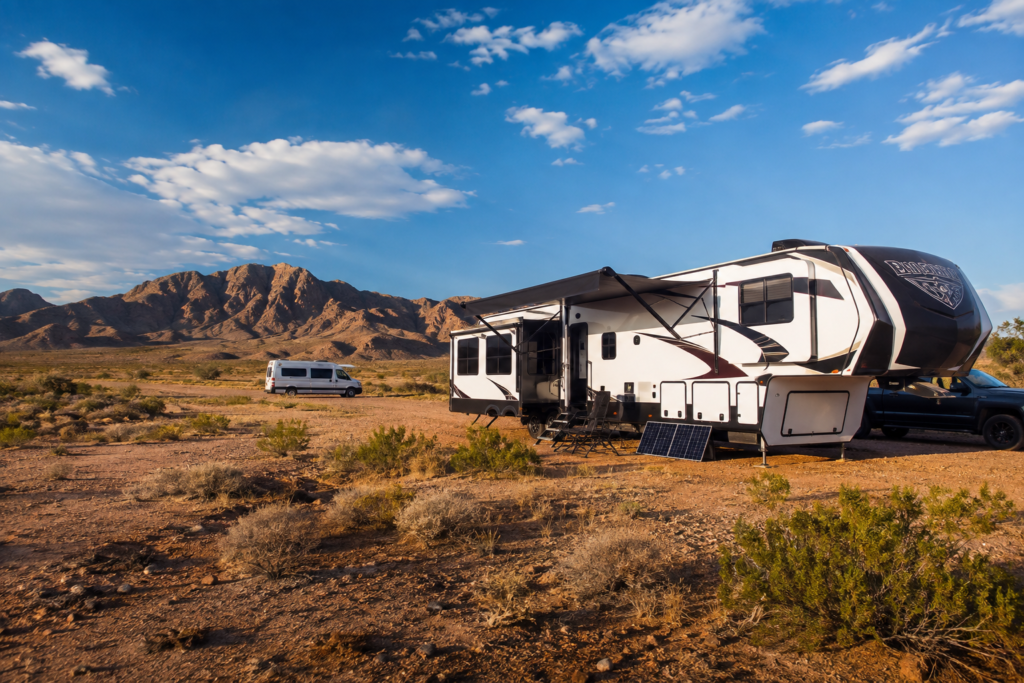
While apps and websites are fantastic, some old-school methods and general knowledge can still be incredibly useful.
Ranger Stations and Visitor Centers
Don’t underestimate the value of a conversation with a local expert. Before heading deep into a National Forest or BLM area, stop at a ranger station or visitor center.
Local Knowledge
Rangers can provide up-to-the-minute information on road conditions, fire restrictions, specific dispersed camping areas (some might not be listed online), water sources, and any current hazards. They often know the hidden gems and can advise on what type of rig can access certain roads.
Paper Maps
While digital maps are great, having a physical map as a backup is always a good idea, especially in areas with no cell service. Rangers often have detailed topographic maps or specialized recreation maps that offer more detail than what you find online.
Scouting for Spots
Sometimes, the best way to find a spot is to simply drive around. Once you’ve identified a general area on an app or map, take your time exploring.
Look for Established Fire Rings and Pull-Offs
These are often indicators of previously used dispersed camping sites. If you see signs of prior use (but no trash!), it’s a good bet that others have camped there before.
Assess Road Conditions
Don’t assume a dirt road is passable for your rig, especially a larger RV. Pay attention to potholes, washouts, low-hanging branches, and soft ground. If you have any doubts, it’s better to scout on foot or with a smaller vehicle if possible. Always have an exit strategy.
Preparing for a Successful Boondocking Experience
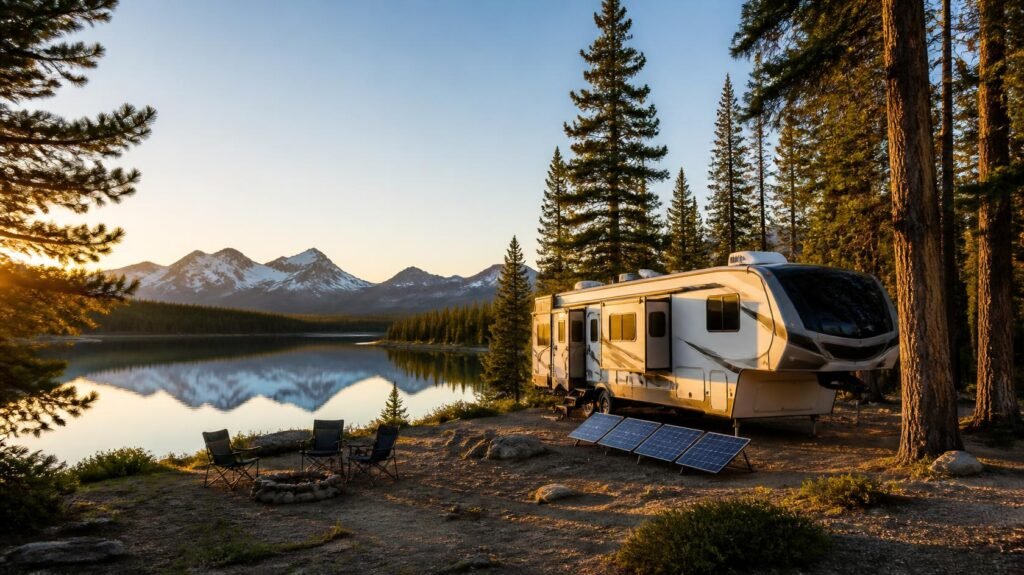
Free camping often means being self-sufficient. You won’t have hookups, so planning ahead is key.
Water and Waste Management
These are your biggest challenges when boondocking.
Fresh Water
Carry plenty of fresh water. Estimate your daily usage and add a buffer. You might need water for drinking, cooking, washing dishes, and showering. Knowing where the nearest potable water fill stations are (often found on iOverlander or Campendium) is crucial. Some campgrounds or rest stops offer water, but always ask permission if it’s not a designated fill station.
Grey and Black Water
Your grey (sink/shower) and black (toilet) water tanks will fill up. You cannot dump these on the ground. You’ll need to locate dump stations, which are usually at campgrounds, RV parks, or dedicated rest stops. Again, iOverlander and Campendium are excellent for finding these.
Power Management
Without electrical hookups, you’ll be relying on your RV’s 12V system, solar, or a generator.
Solar Panels
These are arguably the best long-term solution for boondocking. They silently charge your batteries, allowing you to run lights, fans, and charge devices. Understanding your power consumption and having adequate solar and battery capacity is essential.
Generators
A generator can be a good backup or primary power source for higher-demand appliances or when solar isn’t enough. Be mindful of noise restrictions (many places have specific quiet hours) and fuel consumption.
Battery Monitors
Knowing your battery state of charge is crucial. A good battery monitor will tell you how much power you’ve used and how much you have left, preventing you from running out of juice unexpectedly.
Cell Service and Internet
Don’t expect reliable cell service everywhere, especially in remote boondocking areas.
Cell Boosters
A cell booster can significantly improve weak signals, turning one bar into two or three, which can be enough for basic communication or internet use.
Offline Maps
Download maps for offline use on your phone or GPS device. Apps like Google Maps, iOverlander, and Avenza Maps all offer this functionality and are invaluable when you’re out of service range.
Starlink
For those who need consistent internet access, Starlink is becoming a popular, albeit more expensive, option for RVers. It provides high-speed internet almost anywhere with a clear view of the sky.
Responsible Boondocking Practices
| Resource | Description |
|---|---|
| BLM Land | Bureau of Land Management offers free camping on public lands. |
| National Forests | Many national forests offer free dispersed camping. |
| Walmart | Some Walmart stores allow overnight RV parking for free. |
| Campendium | Online resource for finding free and low-cost campsites. |
| Boondockers Welcome | Network of free RV camping locations on private property. |
To ensure these free camping spots remain available for everyone, and to protect the environment, embracing responsible practices is paramount.
Respect Wildlife
You’re sharing their home. Keep your distance, don’t feed animals, and store food securely to avoid attracting critters. Bears are a particular concern in many areas; know how to properly store food and what to do if you encounter one.
Minimize Your Footprint
Stick to existing roads and campsites. Avoid driving or walking on fragile vegetation. If you must go off-road, ensure it’s allowed and won’t cause damage.
Respect Other Campers
Free camping areas are often shared. Be mindful of noise, especially generators. Give other campers space and respect their privacy.
Support Local Communities
While free camping saves money, consider supporting the local towns you pass through. Buy groceries, gas, or enjoy a meal. These communities often rely on tourism, and a little support goes a long way.
By leveraging these resources and adopting a responsible approach, you’ll unlock a world of incredible, budget-friendly adventures on the open road. Happy boondocking!
FAQs
What are some free camping resources for RVers?
Some free camping resources for RVers include websites like Freecampsites.net, Campendium, and BLM (Bureau of Land Management) land, which offer information on free camping locations.
How can RVers find free camping spots?
RVers can find free camping spots by using resources like apps, websites, and maps that provide information on free camping locations, such as public lands, national forests, and dispersed camping areas.
Are there any restrictions or regulations for free camping?
Yes, there are often restrictions and regulations for free camping, such as limits on the length of stay, rules for waste disposal, and guidelines for campfires. It’s important for RVers to research and follow the specific regulations for each free camping location.
What are the benefits of using free camping resources?
The benefits of using free camping resources include saving money on accommodation costs, experiencing more remote and natural camping locations, and having the opportunity to connect with nature and the local environment.
Are there any downsides to free camping?
Some potential downsides to free camping include limited amenities, such as water and electricity, the need to be self-sufficient, and the possibility of encountering crowded or noisy camping areas. RVers should consider these factors when choosing free camping locations.