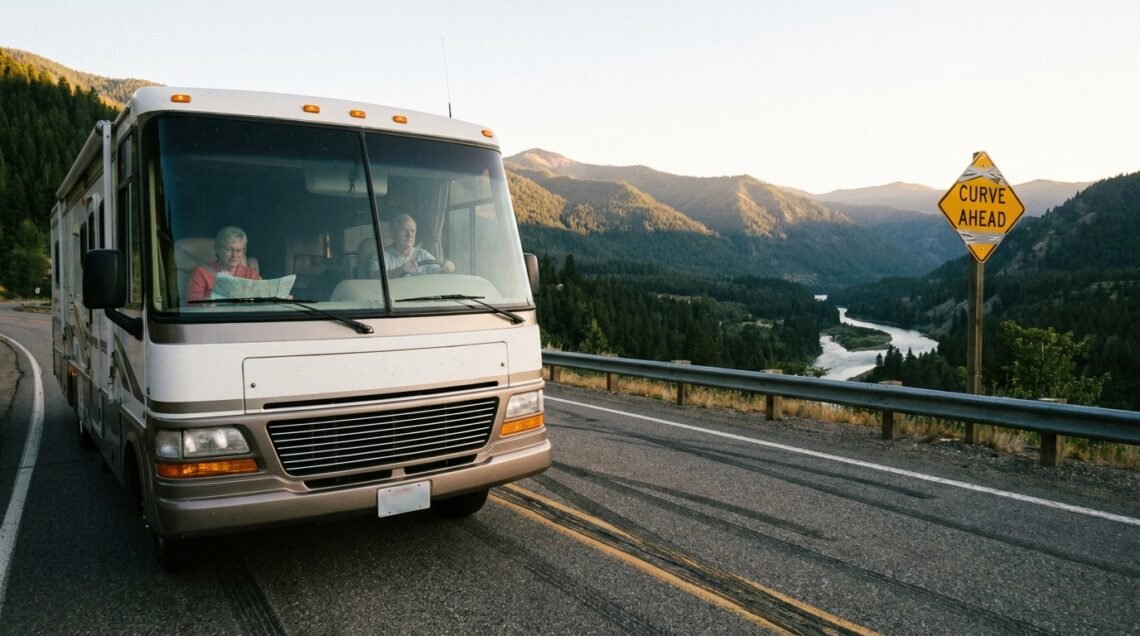
Mastering RV driving tips for beginners is essential because Taking a giant house on wheels down the road is a whole different ballgame than your average sedan. It can feel a bit daunting at first, but honestly, with a little practice and some smart tips, you’ll be navigating highways and byways like a pro in no time. The main thing to remember is that your RV is bigger, heavier, and handles differently. This means you need more space, more time, and more awareness than you’re probably used to.
Table of Contents
Getting to Know Your Beast: Pre-Trip Essentials
Before you even think about hitting the gas, you need to understand what you’re working with. This isn’t just about knowing where the headlights are; it’s about a deep dive into your specific rig.
Know Your Dimensions, Inside and Out
This is non-negotiable. You must know the exact height, width, and length of your RV. Most RVs, especially larger ones, will have this information posted somewhere, usually on a sticker near the driver’s door or inside a cabinet.
Height is Might (for Bridges and Power Lines)
Your RV’s height is probably the most critical dimension. You don’t want to be the reason someone has to explain a smashed-up RV to their insurance company. Rv life GPS is the app top have to avoid low clearances, weight limits, and propane-restricted tunnels.
- Low Bridges and Overhangs: Always be on the lookout for signs indicating bridge clearances. Standard highway overpasses are usually high enough, but older roads, tunnels, and even some city streets can present much lower challenges. Don’t rely on your memory; look for the signs.
- Power Lines and Trees: These are less common hazards on highways, but can be problematic in campgrounds, rural areas, or when maneuvering in tight spots. Be mindful of the space above as well as in front and behind.
Width Matters for Lanes and Docks
While most RVs fit within standard lane widths, especially on highways, you need to be aware of how much space you truly occupy.
- Lane Discipline: Stay centered in your lane. Weaving, even subtly, can make you a hazard to other drivers and risk your mirrors clipping things.
- Gas Stations and Rest Stops: Pulling into a gas station can be an adventure. Many pumps are designed for cars, and you might need to find a truck stop or a station with dedicated RV fueling areas. Pay attention to the width of the drive-through lanes.
- Campground Sites: Some campground sites are snug. Knowing your width will help you judge if you can comfortably fit.
Length Dictates Turning Radius and Following Distance
The longer your RV, the wider your turning radius will be, and the more space you’ll need to stop.
- Turning: You’ll need to make “wide turns.” This means swinging out into the next lane before you turn. Think about a bus making a corner. Visualize the tail end of your RV – it cuts a much tighter inside arc than the front.
- Following Distance: This is absolutely crucial for safety.
Understanding Weight Distribution and GVWR
This is more than just knowing how much your RV weighs; it’s about how that weight is distributed and what your RV is rated to handle.
GVWR (Gross Vehicle Weight Rating)
This is the maximum weight your RV is designed to carry, including the chassis, body, engine, fluids, passengers, and cargo. You can usually find this on a manufacturer’s sticker.
- Don’t Exceed It: Overloading your RV is dangerous. It affects braking, handling, and can strain the tires and suspension.
- Weighing Your Rig: For serious peace of mind, weigh your fully loaded RV at a truck scale. You can find these at truck stops or many highway weigh stations (just ask if they’ll weigh you).
Tongue Weight or Pin Weight
This is the downward force your trailer hitch exerts on the tow vehicle (for fifth-wheels and travel trailers) or the weight of the rear of your motorhome.
- Proper Balance: Too little tongue weight and your trailer can sway wildly. Too much and it can overload your rear axle and affect steering. Refer to your RV and hitch manufacturer’s guidelines.
- Loading Cargo: Pack heavier items closer to the axles and the front of your RV for better balance.
Checking Your “Blind Spots”
Every vehicle has them, but with an RV, they are significantly larger. You need to actively combat these.
Mirrors, Mirrors Everywhere
Your side mirrors are your best friends, but they don’t show you everything.
- Adjusting Properly: Spend time adjusting them so you can see as much of the sides and rear as possible. For larger RVs, you might have convex mirrors at the bottom of your side mirrors to expand your view.
- Spot Mirror Illusion: Be aware that objects can appear closer in convex mirrors than they actually are.
- Regular Checks: Make it a habit to check your mirrors frequently, not just when changing lanes.
Back-Up Cameras are a Game Changer
If your RV has a factory-installed back-up camera, use it religiously. If not, consider an aftermarket one.
- Trust, but Verify: While these are invaluable, don’t rely on them solely. They can get dirty, can have blind spots themselves, and they don’t tell you about sounds or things that are directly below your camera’s view.
For those new to RV driving, especially with large rigs, it’s essential to familiarize yourself with the unique challenges and techniques involved in maneuvering these vehicles. A great resource that complements RV driving tips for beginners is an article that explores the broader experience of living on the road. You can read more about embracing the motor home lifestyle and the various aspects of RV living by visiting this link: Life on the Road: Embracing the Motor Home Lifestyle. This article provides valuable insights that can enhance your journey as you adapt to life in a large RV.
Mastering the Maneuvers: Driving Techniques for Big Rigs
Driving an RV requires a different mindset and approach. It’s less about quick reactions and more about anticipating and planning.
Speed and Braking: Slow and Steady Wins the Race
This is where the weight and length of your RV really come into play.
Responsible Speed Limits
Just because the highway speed limit is 70 mph doesn’t mean your RV should be going that fast.
- Manufacturer Recommendations: Many RV manufacturers recommend a maximum speed, often around 60-65 mph, especially for motorhomes.
- Handling and Stability: Driving slower improves stability, reduces strain on your engine and brakes, and gives you more time to react.
- Fuel Economy: You’ll likely see better gas mileage at a slightly reduced speed.
Braking Power and Distance
Your RV weighs tons. It needs a lot of force and a lot of distance to stop.
- Anticipate Stops: Look miles ahead for red lights, traffic jams, or curves. Start braking early.
- Gentle Application: Slamming on the brakes is rarely a good idea, especially with an RV. It can cause skidding or trailer sway. Apply steady, firm pressure.
- Engine Braking: If your RV has an engine brake (often found on diesel pushers), learn how to use it. It can significantly help with slowing down on inclines and descents, saving your service brakes.
- Brake Controllers (for Towables): If you’re towing, ensure your trailer brake controller is properly set up and adjusted. This is critical for safe stopping.
Lane Changes and Merging: Give Yourself Room to Breathe
These are probably the most nerve-wracking maneuvers for beginners. Patience and planning are everything.
More Space Than You Think You Need
Your RV doesn’t accelerate or change direction like a car.
- The “Big Sweep”: When changing lanes, don’t just signal and turn. You need to create a comfortable buffer zone.
- The “Space Bubble”: Think of yourself as a large bubble on the road. Other vehicles need to give you space as well.
- Merging Safely: Find a large gap in traffic and accelerate smoothly to match the flow of traffic before merging. Don’t force your way in. If a gap isn’t there, slow down slightly and wait for a better opportunity, but avoid coming to a complete stop on the highway if at all possible.
Using Your Signals Effectively
Your turn signals are not optional.
- Longer Use: Signal your intentions earlier and keep your signal on a bit longer when changing lanes or turning. This gives other drivers ample warning.
- Check Again: Before committing to a lane change or turn, check your mirrors and blind spots one last time.
Hills and Descending: Conquer the Grades
There’s a unique thrill to driving a large vehicle up a mountain, but descending can be more daunting.
Ascending Inclines
- Downshift: Don’t be afraid to downshift. This takes strain off your engine and helps maintain speed. Many modern RVs have automatic transmissions that will downshift for you, but you can often manually select a lower gear if needed.
- Monitor Engine Temperature: Keep an eye on your temperature gauge. Climbing steep grades can put a lot of stress on your engine.
- Be Patient: You’ll likely be slower than other traffic. Don’t get flustered. You might even find passing lanes or pull-offs where slower vehicles can allow faster ones to go by.
Descending Declines
This is where braking finesse is crucial.
- Use Lower Gears: As mentioned with engine braking, select a lower gear to control your descent. Don’t ride your brakes all the way down.
- “Runaway Ramps”: Familiarize yourself with these safety features on steep grades. They are designed for vehicles to use if their brakes fail.
- Brake Fade: Riding your brakes can cause them to overheat and become less effective – this is known as brake fade. This is incredibly dangerous.
Parking and Backing: The Ultimate RV Challenge
This is often the final frontier for beginners. It takes practice, patience, and sometimes a co-pilot.
Finding Suitable Parking Spots
Your RV isn’t fitting into a compact spot at the mall.
Strategize Your Parking
- Look Ahead: When you’re approaching a parking lot or campground, plan your route through it. Look for wider aisles and spaces.
- Avoid Tight Corners: Many parking lots have tight corners designed for cars. You might need to go around the block to find a better access point.
- RV-Friendly Lots: Truck stops, some large grocery stores, and dedicated RV parks are your best bet.
The Art of Backing Up
This is where the cones, an empty parking lot, and a patient friend can be your best instructors.
Getting a Spotter
- The Co-Pilot: If you have a passenger, make them your designated spotter. They can stand where you can see them and give you clear, concise instructions.
- Hand Signals: Agree on simple hand signals for “stop,” “a little to the left/right,” and “straight.”
Mastering the Technique
- Steer Opposite the Direction You Want the Rear End to Go: This is the fundamental rule of backing a trailer or RV. If you want the rear end to go left, you steer the wheel left.
- Small, Controlled Movements: Make small adjustments to the steering wheel. It’s much easier to over-correct than under-correct.
- Forward, Then Reverse: If you’re getting frustrated, it’s often easier to pull forward a bit to straighten out, then try backing up again.
- Practice, Practice, Practice: Find an empty parking lot and set up some cones. Practice backing into imaginary spots. The more you do it, the more intuitive it becomes.
Using Steering Wheel Orientation for Backing
This is a lesser-known but incredibly helpful technique.
“Ninety Degrees” Rule
- When to Use It: When your RV is at roughly a 90-degree angle to your desired parking spot, and you’re looking at the rear bumper from the driver’s seat, the movement of your steering wheel directly translates to the direction the rear of the RV wants to go.
- Example: If you want the rear to go to the left, turn the steering wheel left. If you want it to go right, turn the steering wheel right. This rule applies when you can see the rear of the RV perpendicular to your path.
Fueling Up: Not Your Average Gas Station Run
Refueling a large RV is a different experience.
Finding the Right Stations
- Truck Stops: These are your best friends. They have higher pumps, more space, and often dedicated diesel lanes.
- Large Gas Stations: Some larger, independent gas stations might have extra-long hoses or spaces designated for RVs.
- Planning Ahead: Use apps like GasBuddy or simply look at your GPS for truck stop locations along your route. Don’t wait until you’re on fumes.
The Process
- Positioning is Key: Pull up so your fuel door is on the correct side and you have plenty of room to maneuver.
- Pump Types: Most large RVs run on diesel. Ensure you’re using the diesel pump, not gasoline.
- Listen for the Click: Just like a car, the nozzle will usually click off when the tank is full. Don’t try to overfill it.
For beginners venturing into the world of RV driving, especially with large rigs, understanding the nuances of handling such vehicles is crucial for a safe and enjoyable experience.
Campground Etiquette and Maneuvering In
Arriving at your destination is only half the battle. Getting into your campsite can be another challenge.
Site Selection and Arrival
- Map It Out: When you arrive at a campground, take a look at the site map. Try to visualize arriving at your site.
- Pull-Through vs. Back-In: If you’re new, the easiest option is a pull-through site, where you drive in one side and out the other. Back-in sites are more common and require practice.
- Scout the Site: If possible, drive by your assigned site slowly to check for obstacles like trees, posts, or low-hanging branches.
Backing into a Site
This is essentially practicing your backing skills in a more confined space.
- Spotter Essential: Always have a spotter when backing into a campsite.
- Take Your Time: There’s no rush. If you get it wrong, pull forward and try again.
- Leveling Considerations: Think about how the site slopes. You might need to back in at an angle to level your RV later.
Navigating Campground Roads
- Slow and Steady: Campground roads can be narrow and winding. Drive slowly and be aware of parked vehicles.
- Watch for Pedestrians and Kids: Campgrounds are places for families. Always be on the lookout for children playing or walking.
- Obstacle Awareness: Be mindful of trees, signs, utility poles, and other campers’ vehicles.
Continuous Learning and Practice: The Key to RV Confidence
Nobody becomes an expert RV driver overnight. It’s a journey.
Embrace the Learning Curve
- Don’t Be Afraid to Ask: Fellow RVers are usually happy to share tips and advice.
- Watch Videos: There are tons of great video tutorials on YouTube covering specific RV driving techniques.
- Take a Course: Consider attending an RV driving school or course. They offer hands-on instruction in a safe environment.
Practice Makes Perfect
- Weekend Getaways: Start with short trips to local parks to build your confidence before tackling longer journeys.
- Familiarize Yourself: Before a big trip, drive your RV around your neighborhood or on less-trafficked roads to get a feel for its handling.
Driving a large RV is a rewarding experience. It opens up a world of travel and adventure. By focusing on these practical tips, practicing patiently, and always prioritizing safety, you’ll be maneuvering your home on wheels with confidence in no time. Enjoy the ride!
FAQs
1. What are some important tips for driving a large RV for beginners?
Some important tips for driving a large RV for beginners include practicing in an empty parking lot, being aware of the vehicle’s height and weight, taking wide turns, and maintaining a safe following distance.
2. How should beginners approach driving on highways and narrow roads with a large RV?
Beginners should approach driving on highways and narrow roads with a large RV by staying in the right lane, maintaining a steady speed, and being cautious of overhanging branches or tight turns.
3. What are some key safety considerations for driving a large RV as a beginner?
Key safety considerations for driving a large RV as a beginner include checking tire pressure and weight distribution, using side mirrors effectively, avoiding distractions, and being mindful of blind spots.
4. What should beginners know about parking and maneuvering a large RV?
Beginners should know about parking and maneuvering a large RV by practicing backing up in an open area, using a spotter when necessary, and being mindful of the vehicle’s length and clearance.
5. Are there any specific maintenance tips for large RVs that beginners should be aware of?
Specific maintenance tips for large RVs that beginners should be aware of include checking the engine, brakes, and fluid levels regularly, inspecting the roof and seals for leaks, and scheduling routine maintenance with a certified technician.