
What’s the Real Deal: Fifth Wheel or Travel Trailer?
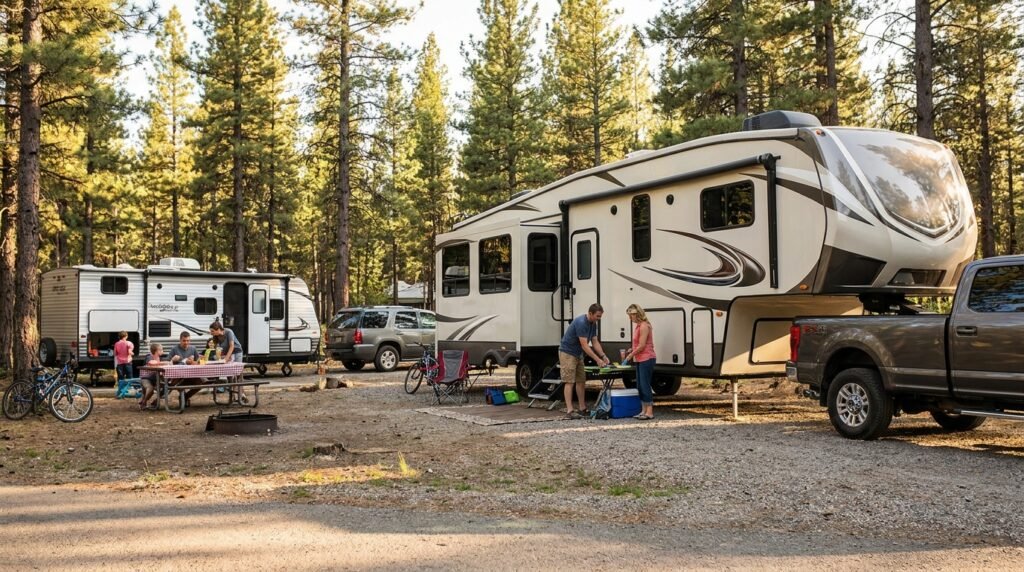
So, you’re looking to hit the road and explore, but you’re stuck between a fifth wheel vs travel trailer. The quick answer is: it really depends on what you value most. Fifth wheels generally offer more space, a more stable towing experience, and often a higher quality build, making them great for longer trips or full-timing. Travel trailers, on the other hand, are more affordable, lighter, and give you the flexibility to unhitch your tow vehicle and use it independently. Both have their strong points and their trade-offs, and diving into the specifics will help you figure out which one aligns best with your camping style and budget.
When considering the pros and cons of fifth wheels versus travel trailers, it’s essential to also think about the practical aspects of RV ownership, especially for first-time users. A helpful resource that provides a comprehensive overview of what to prepare for your initial RV adventure is the article found at First RV Trip Checklist. This guide covers everything from essential gear to safety tips, ensuring that your first experience on the road is enjoyable and stress-free.
Table of Contents
Towing and Maneuverability
When it comes to getting your home-on-wheels from point A to point B, the differences between fifth wheels and travel trailers are pretty significant. It’s not just about how they attach, but how they behave on the road.
Hitching Up
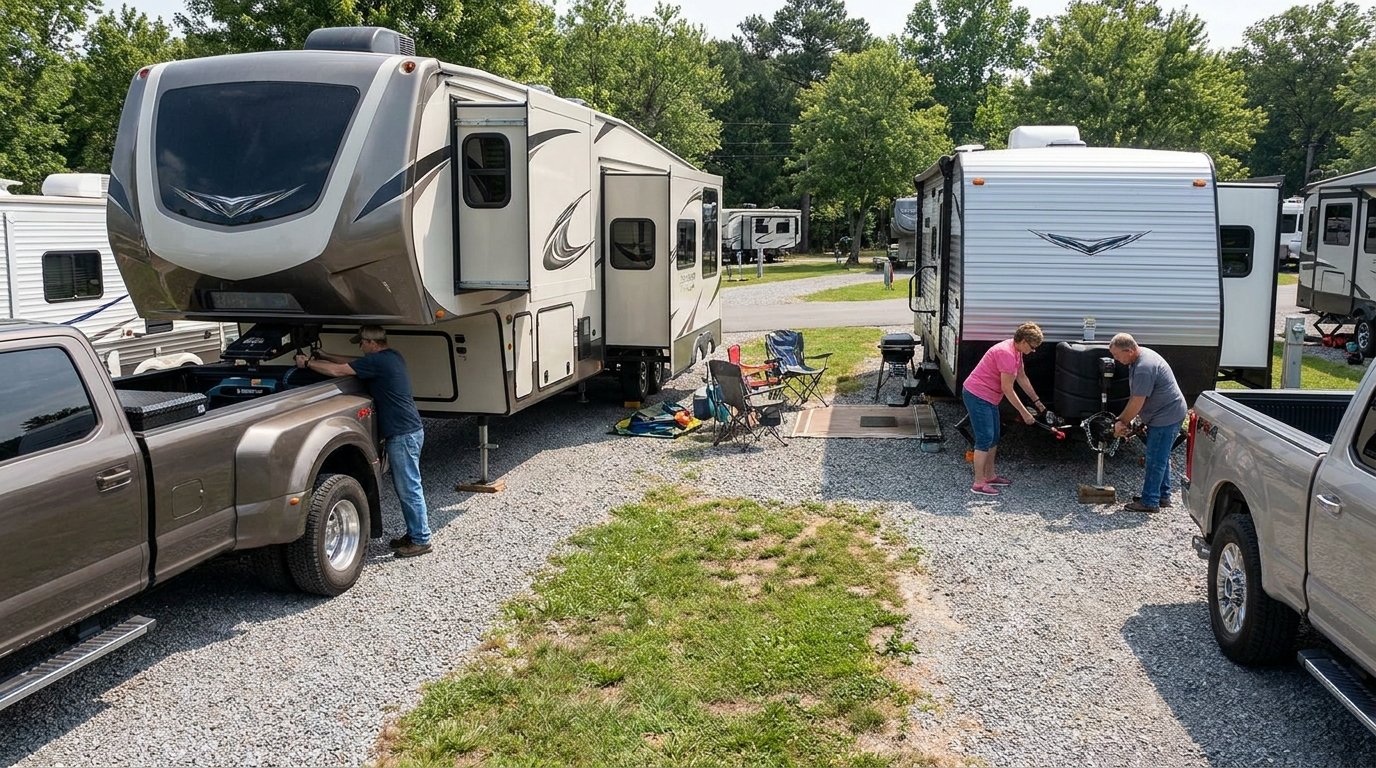
For fifth wheels, you’re looking at a gooseneck-style hitch that mounts directly into the bed of your pickup truck. This connection point sits over the rear axle, which is a major factor in its towing characteristics. It requires a specific hitch installation and generally means your truck bed is mostly occupied by the hitch itself. Travel trailers, however, use a bumper-pull hitch, connecting to a standard hitch receiver on the back of almost any suitable tow vehicle – trucks, SUVs, even some larger sedans. While easier to find a compatible tow vehicle, the weight distribution with a bumper-pull hitch is different, which leads to other considerations.
On-Road Stability
This is where fifth wheels often shine. Because the hitch point is over the rear axle of the truck, the weight is distributed more effectively, leading to a much more stable and controlled towing experience. You’ll generally feel less sway, especially in crosswinds or when passing large trucks. This translates to less fatigue for the driver on long hauls. Travel trailers, especially longer or heavier ones, can be more prone to sway. While anti-sway devices and weight distribution hitches can significantly mitigate this, the fundamental physics of a bumper-pull connection mean they will generally be less stable than a fifth wheel of comparable size. This isn’t to say travel trailers are inherently unsafe to tow, but they often require more active attention and potentially specialized equipment to maintain optimal stability.
Backing Up and Parking
Maneuvering in tight spots is another area where fifth wheels tend to have an advantage, once you get the hang of it. The pivot point being over the truck’s axle means the trailer generally follows the truck’s turns more predictably. It can feel more intuitive for many drivers, almost like the trailer is an extension of the truck. Travel trailers, with their pivot point at the very rear of the tow vehicle, have a larger “swing” radius. This means backing up often requires more anticipation and wider turns, and can be more challenging for beginners to master. However, the travel trailer’s ability to be easily disconnected and pushed by hand (if small enough) or moved with a trailer mover can be a huge bonus in very tight campsites or for minor adjustments once unhitched.
Interior Space and Layout
Stepping inside is where you’ll really start to feel the differences in design philosophy between these two types of RVs. The unique hitching mechanisms directly influence what manufacturers can do with the living space.
Headroom and Levels
Fifth wheels, by their very nature, are designed with different levels. The raised front section that extends over the truck bed typically houses the main bedroom and often a bathroom. This multi-level design allows for much higher ceilings in the main living areas below, often reaching 8 to 10 feet or more. This creates a more open, spacious, and residential feel. Travel trailers, being single-level throughout, generally have more uniform but lower ceiling heights, usually around 6.5 to 7 feet. While perfectly adequate, it can feel less expansive than a fifth wheel. This difference in height is a key factor for taller individuals or those who simply prefer a more open living space.
Bedroom Configuration
The over-cab area of a fifth wheel is almost exclusively dedicated to the master bedroom. This often means a true walk-around queen or even king-sized bed, sometimes with closets and dressers built into slides, creating a private and comfortable sanctuary. Because it’s elevated, it feels distinct from the rest of the living space. Travel trailers, being single-level, integrate the master bedroom in various ways. It can be a dedicated front or rear bedroom with a walk-around bed, but it might also be a corner bed or part of a multi-purpose space, especially in smaller units. While perfectly functional, the privacy and spaciousness of a fifth wheel’s master bedroom are often superior.
Kitchen and Living Areas
Due to the higher ceilings and often wider body designs made possible by their heavy-duty frames, fifth wheels generally offer more expansive kitchen and living areas. You’ll frequently find larger countertops, bigger refrigerators, and more extensive storage options in fifth wheel kitchens. Living rooms often feature multiple sofas or recliners, entertainment centers, and more open floor plans. Travel trailers, while increasingly innovative with their layouts, still have to contend with being a single-level unit. Their kitchens and living areas can be very functional and comfortable, but they might feel a bit more compact or less residential than a similarly-sized fifth wheel. However, smaller travel trailers often excel at clever space-saving designs, offering a surprising amount of utility in a compact footprint.
Storage Opportunities
The multi-level design of fifth wheels not only impacts living space but also storage. The area underneath the raised front section (where the hitch connects to the truck) often creates a massive pass-through storage compartment, often accessible from both sides. This “basement” storage is a huge advantage for carrying bulky items like camping gear, grills, or extra supplies. Many fifth wheels also integrate more interior storage thanks to their larger size and higher ceilings. Travel trailers, while offering various storage solutions, typically have smaller exterior storage compartments and less “basement” capacity. Interior storage is good, but the sheer volume often found in a fifth wheel is hard to match.
Cost and Value
Budget is almost always a deciding factor when making a big purchase like an RV. There’s the upfront cost, of course, but also the ongoing expenses that can really add up.
Initial Purchase Price
Generally speaking, travel trailers are the more budget-friendly option when it comes to initial purchase price. You can find new travel trailers ranging from entry-level models under $20,000 to luxury units well over $100,000. This wide range makes them accessible to a broader demographic. Fifth wheels, due to their more complex construction, larger size, and often higher-end finishes, typically start at a higher price point. New fifth wheels often begin in the $40,000-$50,000 range and can easily climb past $150,000 for high-end models. So, if your primary concern is getting into RVing for the lowest possible upfront cost, a travel trailer usually wins out.
Tow Vehicle Requirements
This is a critical cost consideration that often gets overlooked. To tow most fifth wheels, you absolutely need a heavy-duty pickup truck (a 3/4-ton or 1-ton, sometimes even a dually). These trucks are significantly more expensive to purchase new or used than a half-ton pickup, SUV, or even a larger sedan that might be capable of towing a travel trailer. If you don’t already own a suitable truck, you’ll need to factor in the cost of buying one, which can easily add tens of thousands of dollars to your overall investment. For travel trailers, the tow vehicle requirements are much more varied. Smaller travel trailers can be towed by many SUVs or half-ton trucks, which might already be in your driveway or are more affordable to acquire. Always check the tow vehicle’s capacity against the RV’s loaded weight.
Insurance and Maintenance
Insurance costs for both types of RVs will vary based on their value, your location, and your driving history. However, larger, more expensive RVs (which often includes fifth wheels) can sometimes have higher insurance premiums simply due to their replacement cost. When it comes to maintenance, both types of RVs require regular upkeep, from roof inspections to appliance servicing. However, fifth wheels often have more complex systems (like hydraulic leveling or multiple slide-outs), which can lead to higher repair costs if something goes wrong. Travel trailers, especially simpler models, might have fewer complex components, potentially making maintenance a bit less expensive on average.
Depreciation
Like any vehicle, both fifth wheels and travel trailers depreciate over time. The rate of depreciation can vary greatly depending on the brand, condition, and market demand. Generally, RVs depreciate fastest in their first few years. There isn’t a hard and fast rule that one type depreciates significantly more than the other. What impacts resale value more are factors like overall condition, how well it was maintained, and its popularity in the used market. A well-maintained fifth wheel from a reputable brand can hold its value quite well, just as a popular travel trailer model can.
When considering the pros and cons of fifth wheels versus travel trailers, it’s essential to also think about the maintenance required for each type of RV. Proper upkeep can significantly enhance your travel experience and ensure safety on the road. For a comprehensive guide on maintaining your RV, you can check out this informative article on RV maintenance, which offers a detailed checklist for safe, worry-free travel. Understanding these aspects will help you make a more informed decision about which RV style suits your needs best. You can read more about it here.
Lifestyle and Usage
| Aspect | Fifth Wheel | Travel Trailer |
|---|---|---|
| Pros |
|
|
| Cons |
|
|
| Typical Weight Range | 7,000 – 20,000 lbs | 2,000 – 10,000 lbs |
| Average Length | 20 – 40 feet | 12 – 35 feet |
| Required Tow Vehicle | Pickup truck with fifth wheel hitch | Varies: SUVs, trucks, or vans with bumper hitch |
| Storage Considerations | Requires higher clearance and larger space | Easier to store in standard garages or lots |
Beyond the nuts and bolts, how you plan to use your RV and the kind of experience you’re looking for will heavily influence which type is a better fit.
Full-Timing Potential
For those considering full-time RV living, fifth wheels are often the preferred choice. Their larger interior space, higher ceilings, residential feel, and ample storage make them much more comfortable for extended stays. The separate bedroom often provides a sense of privacy that’s highly valued when living in a smaller space for months on end. The robust construction typically found in fifth wheels also makes them more suitable for the wear and tear of full-time use and for handling varying climates. While some people do full-time in travel trailers, it’s generally in larger, more luxury-oriented models, and they might still feel the pinch of less space compared to a fifth wheel.
Weekend Trips vs. Extended Travel
If your primary use is weekend getaways or short vacations, a travel trailer often makes more sense. They’re quicker to hitch up (once you get the hang of it), easier to maneuver into tighter campsites, and less of a financial commitment overall. You can unhitch at your destination and use your tow vehicle to explore, run errands, or visit local attractions without having to pack up your entire living space. Fifth wheels are certainly capable of weekend trips, but their size and the commitment of the heavy-duty tow vehicle might feel like overkill for short excursions. They truly shine on longer trips where the extra space and stability become invaluable.
Off-Grid Camping and Boondocking
For boondocking or off-grid camping, both types of RVs can be adapted, but there are some nuances. Smaller, lighter travel trailers can often access more remote locations that might be too challenging for a large fifth wheel and its heavy-duty tow truck. Their lower profile can also be an advantage in areas with low-hanging branches. However, fifth wheels often come with larger fresh, grey, and black water tanks as standard, which is a big plus for extended boondocking. They also have more roof space for solar panels, which is crucial for generating your own power. So, it really depends on the type of off-grid camping you envision – remote and rugged, or just extended stays away from hookups.
Campground Accessibility
This is where the size of the RV comes into play. Smaller travel trailers are generally much easier to fit into older, state, or national park campgrounds, which often have length and height restrictions. Their maneuverability also helps in tighter spots. Larger travel trailers and most fifth wheels, however, might struggle in these older campgrounds. They often need larger, more modern private RV parks that are designed to accommodate big rigs. Always check campground specifications before booking if you have a larger RV.
Practical Considerations
Beyond the big categories, there are a few practical aspects that can tip the scales one way or the other. These are the details that often surface once you’re actually out there camping.
Unhitching and Setup
Unhitching a travel trailer is generally a quicker and simpler process. You lower the tongue jack, disconnect the safety chains, electrical, and hitch, and drive away. Setting up camp can involve leveling, extending stabilizers, and connecting utilities. Fifth wheels have a slightly more involved unhitching process due to the nature of their hitch. You’ll need to lower the landing gear, unlatch the hitch mechanism, and then slowly drive forward while lowering the truck bed to clear the kingpin. While not difficult, it takes a bit more coordination than a bumper pull. Setup once unhitched is similar, involving leveling, stabilizers, and utilities, but many fifth wheels have hydraulic or electric auto-leveling systems, which can make setup incredibly fast and easy.
Separating from Tow Vehicle
This is a huge advantage of any towable RV over a motorhome, but there’s a difference between a travel trailer and a fifth wheel. With a travel trailer, once it’s unhitched, your tow vehicle is completely free. This means you can use your SUV or truck to go sightseeing, run to the grocery store, or explore without having to pack up your entire campsite. With a fifth wheel, your tow vehicle is still a heavy-duty pickup truck. While it’s free to drive around, it’s not as nimble or fuel-efficient as a smaller SUV or car. Some fifth wheel owners will even tow a small car behind their fifth wheel (if regulations allow) specifically for getting around once set up. This adds another layer of complexity and cost.
Resale Market and Demand
Both fifth wheels and travel trailers have strong resale markets, though demand can fluctuate based on location, economy, and current trends. Generally, well-maintained RVs from reputable brands tend to hold their value better. Fifth wheels, particularly those designed for full-time living, can command good prices because they offer a certain level of comfort and amenities that many buyers are looking for. Travel trailers, especially smaller, lightweight models, also have consistent demand because they are accessible to a wider range of tow vehicles and budgets. Ultimately, a clean, well-functioning RV with updated features will always be more attractive to a potential buyer, regardless of type.
Potential for Expansion (Slide-Outs)
Both travel trailers and fifth wheels widely use slide-outs to expand interior living space when parked. However, fifth wheels often incorporate more and larger slide-outs, including full-wall slides, which significantly open up the interior. Because of their robust chassis and multi-level design, fifth wheels can sometimes accommodate more extensive slide-out configurations without compromising structural integrity. Travel trailers also use slide-outs very effectively, but you might find fewer multi-slide layouts or full-wall slides in smaller and mid-sized models compared to their fifth-wheel counterparts. The number and size of slide-outs directly impact the living space, making a huge difference in comfort, especially for longer stays.
FAQs
What is the main difference between a fifth wheel and a travel trailer?
A fifth wheel is designed to be towed by a pickup truck with a special hitch that is mounted in the bed of the truck, while a travel trailer is towed by a hitch at the rear of a vehicle.
Which one is easier to tow, a fifth wheel or a travel trailer?
Generally, a fifth wheel is considered easier to tow because the hitch point is located in the bed of the truck, providing better stability and maneuverability compared to a travel trailer hitched at the rear of a vehicle.
Are fifth wheels or travel trailers more spacious?
Fifth wheels are typically more spacious than travel trailers because they have a raised section that extends over the bed of the towing vehicle, allowing for additional living space or a second level.
Which type of RV offers better stability on the road, a fifth wheel or a travel trailer?
Fifth wheels are known for providing better stability on the road compared to travel trailers due to their unique hitch design that places the hitch point in the bed of the towing vehicle, resulting in less swaying and better handling.
What are some advantages of choosing a travel trailer over a fifth wheel?
Travel trailers are generally more affordable than fifth wheels, easier to store when not in use, and can be towed by a wider range of vehicles, including SUVs and trucks with a hitch at the rear.